


Every 210 days the island changes register. The roads fill with tall bamboo poles bent over like wheat in wind, the family compounds empty into the temples, and the work of the day gives way to something older. Galungan in Bali is the Balinese Hindu celebration of dharma over adharma, good over evil, and the ten days that follow are the most important stretch in the island's calendar. The next falls on Wednesday 13 January 2027.
The short version: The next Galungan falls on Wednesday 13 January 2027, with Kuningan ten days later on Saturday 23 January. It marks the victory of good over evil and the return of ancestral spirits to the family home. You will know it by the penjor, the curved bamboo poles outside every house. Visitors are welcome to watch, quietly and dressed with respect.
What is Galungan?
Galungan is the Balinese Hindu festival that marks the triumph of good (dharma) over evil (adharma), and the days when ancestral spirits return to visit the family home. It is set by the Pawukon, the 210-day Balinese ritual calendar, so it has no fixed Western date and comes round roughly every seven months.
Families clean and dress the household temple, prepare offerings, and gather. Kuningan, ten days on, marks the spirits' journey back and closes the cycle. It is less a single event than a long, communal homecoming, closer in spirit to Christmas than to a public holiday, observed across the whole island at once.
2026 was unusual. It held only one Galungan all year, in mid June. 2027 returns to the usual rhythm of two, the first on 13 January and the second in mid August.
When is the next Galungan?
The next Galungan is Wednesday 13 January 2027, and Kuningan is Saturday 23 January 2027. The days around them carry their own names and rites: Penampahan, the day before, when families prepare and the feast is cooked, and Manis Galungan, the day after, given over to visiting relatives.
| Day | 2027 date | What happens |
|---|---|---|
| Penampahan | Tue 12 January | Cooking, offerings, the penjor raised |
| Galungan | Wed 13 January | Prayer, temple visits, the spirits welcomed |
| Manis Galungan | Thu 14 January | Visiting family and friends |
| Kuningan | Sat 23 January | The spirits depart, the cycle closes |
What you will see: the penjor, the offerings, the barong
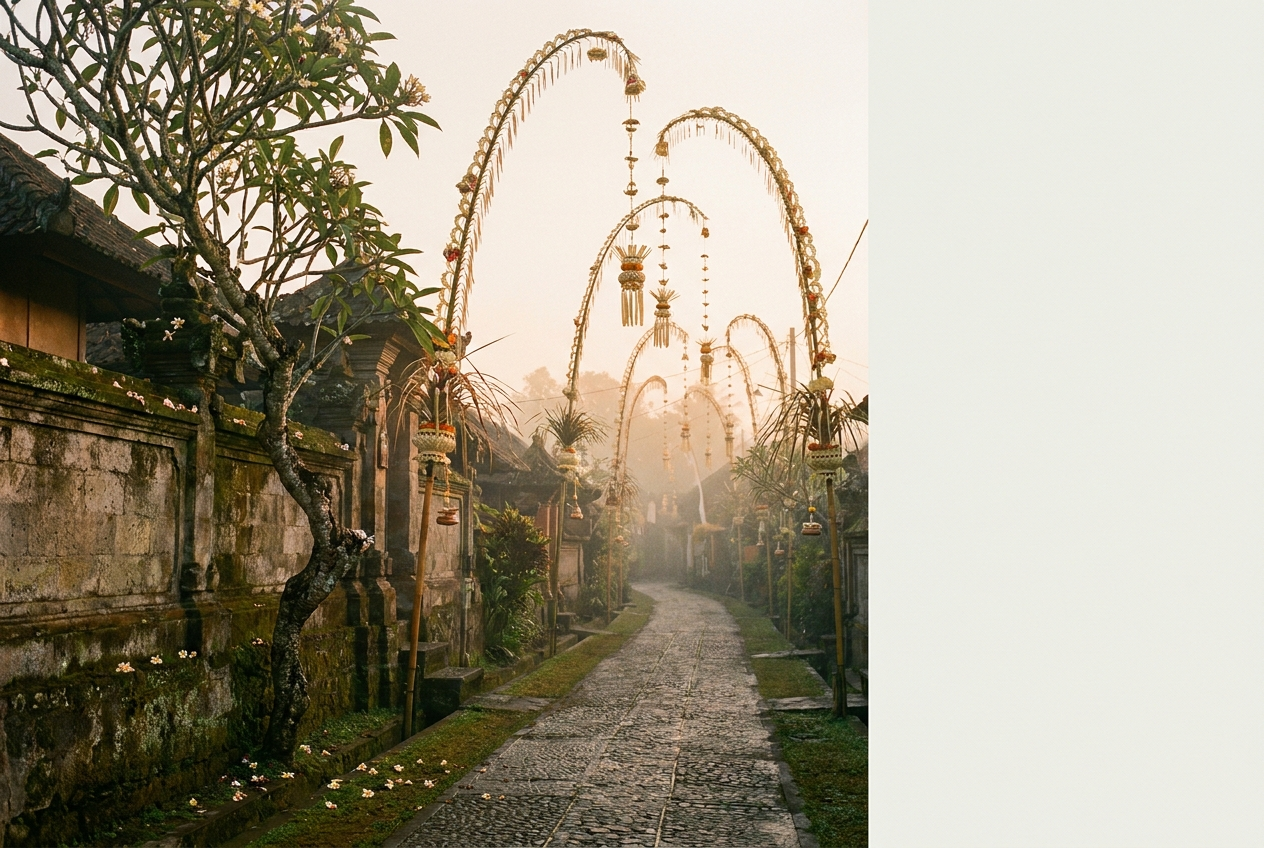
The clearest sign is the penjor: a tall bamboo pole, arched at the top, dressed with young coconut leaf, rice, fruit and small woven things, planted to the right of every gateway. It stands for prosperity and gratitude, and for Mount Agung, the island's high point. A street of them, leaning and gold in late light, is the image most people carry home.

Closer to the ground are the offerings, the small palm-leaf trays of flowers, rice and incense set on thresholds, shrines and pavements through the day. In some villages a Barong, the lion-like guardian figure, is led house to house with gamelan to clear bad spirits and restore balance. Through it all the temples fill with families in their finest, white and gold, sarong and sash, unhurried.
Is everything closed during Galungan?
No. Most places that serve visitors stay open, while many family-run businesses close for the day or open only after midday once the morning's prayers are done. Hotels, the better restaurants, beach clubs and the airport keep running, often on lighter staff.
Two practical notes. Roads are busier than usual as families travel to ancestral villages, so leave extra time for anything with a fixed hour. And some temples limit or pause tourist access while ceremonies are underway, so a temple you meant to see may be given back to its purpose for the day. None of this is an obstacle. It is the point.
Galungan in Uluwatu

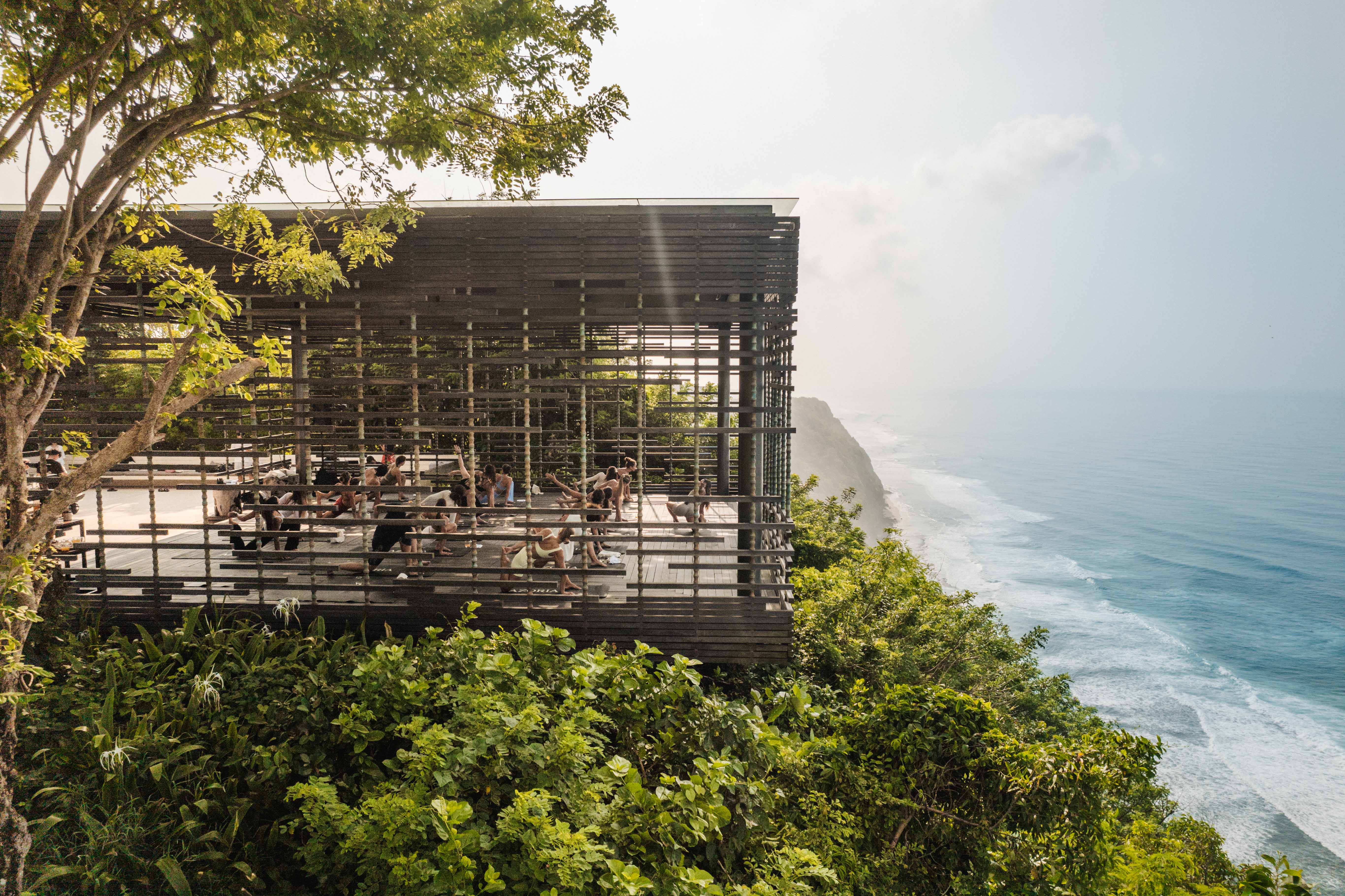
On the Bukit, Galungan is quieter and less staged than in Ubud, which suits the place. The cliffs and the warungs dress their gateways; the surf crowd thins as Balinese staff return to their villages; the cafes that stay open keep an easier pace. It is one of the better weeks to stay on the cliff and to do less.
If you want to mark the day, Pura Luhur Uluwatu, the sea temple on the southern cliff, is the obvious pilgrimage, and its Kecak dance at sunset remains the island's most atmospheric, fire and a hundred voices against the last of the light. During the festival the temple's own ceremonies come first, so check access locally before you go, and dress for a temple whether or not you plan to pray: a sarong and sash, shoulders covered.

At the house, we keep the week the way the island keeps it. The courts open a little later (the game itself, and where it is played, is covered in our clifftop guide to padel in Uluwatu). The afternoon runs long. We give our Balinese team the days they are owed at home, and the kitchen leans into the slowness rather than against it. A festival is a good teacher of the thing Azoria believes anyway: that the best days are built, not booked, and that nothing here needs to finish on the hour. There is a longer shelf of reading waiting in the Library, and a Long Table that is never better than during a holiday week.
How to be a good guest

Galungan is a religious occasion that happens to be beautiful, not a spectacle staged for visitors, and the etiquette is mostly common courtesy made specific.
- Dress for it. At any temple or ceremony, wear a sarong and a sash at the waist. Cover your shoulders. White or muted is right; loud is not.
- Mind the offerings. The little palm-leaf trays on the ground are sacred. Step around them, never over or on them.
- Keep your distance during prayer. Do not walk in front of someone praying, and keep your voice low near a ceremony.
- Ask before you photograph. A nod or a quiet word first, no flash, and never push a lens into a private moment. Most people will smile and agree.
- Wish them well. "Selamat Hari Raya Galungan" is the greeting of the week, and it is always welcome.
Frequently asked questions
What is Galungan and why is it celebrated?
Galungan is a Balinese Hindu festival marking the victory of good over evil and the return of ancestral spirits to the family home. It is set by the 210-day Pawukon calendar and is the most important celebration in the Balinese year.
When is the next Galungan?
The next Galungan is Wednesday 13 January 2027, and Kuningan, which closes the ten-day cycle, is Saturday 23 January 2027. The cycle returns again in mid August 2027.
Is everything closed in Bali during Galungan?
No. Most hotels, restaurants, beach clubs and the airport stay open, sometimes on reduced staff. Many small family-run shops close for the day or open after midday. Expect heavier traffic as families travel home.
Can tourists watch Galungan?
Yes, respectfully. Dress in a sarong and sash at temples, keep back from people at prayer, step around the ground offerings, and ask before taking close photographs. It is a religious occasion, not a performance.
What is the penjor at Galungan?
The penjor is the tall, arched bamboo pole set outside every Balinese home and business during Galungan. Dressed with coconut leaf, rice and fruit, it symbolises prosperity, gratitude and Mount Agung.
By Manis Galungan the poles are still standing, a little lower now, and the island goes back to its work with the family still in the house. We pour the coffee a touch later that week, and no one minds.
Further reading
- Bali.com, Galungan: a clear cultural overview of the festival and its meaning.
- Indonesia.travel, Galungan and Kuningan: the official tourism board on the rites and their order.
- Time Out, Galungan and Kuningan: what the dates mean for travellers during the festival.
Share:
Is Padel Good Exercise? What an Hour on Court Does
Recovery After Padel in Bali: The Hours That Matter