


Bali's wet season runs from November to March, and it changes almost nothing about whether the game goes on. Padel in the wet season is one of the quiet pleasures of the Bukit: the rain arrives in the late afternoon, falls hard for an hour, and clears. Around it, on a well-drained or covered court, the match continues. The drink after tastes better for the weather outside.
The short version: Yes, you can play padel in the rain. Light rain on a well-drained court is usually fine; a soaked court is not. Covered and semi-indoor courts remove the question entirely, which is why padel is one of the few sports in Bali that holds its calendar straight through the wet season.
Can you play padel in the rain?
Light rain on a court that drains well is usually playable. A soaked court is not. Once water sits on the surface the floor turns slippery, the grip on your racket goes, and the ball takes on water and stops bouncing the way it should. The sensible rule: a drizzle is fine, a downpour on standing water is not.
What actually changes when a court is wet is worth knowing before you step on. A wet ball gets heavier and slower, and the rebound off wet glass drops sharply. Footing is the real hazard, not the rain itself. Most injuries in the wet come from a slide that would have been routine on a dry floor. Shorten the steps, take the slides out of your game, and the risk falls away. On a covered court none of this applies, and you play as you would in July.
When is Bali's wet season, and how wet is it really?
Bali's wet season runs from roughly November to March, with the heaviest rain in December and January. It is warmer than the dry season, not colder, and the rain tends to come in a single afternoon burst rather than all day. The mornings are often clear. This matters for padel: book the court for the morning or early afternoon and you rarely meet the rain at all.

| Month | Pattern | Rain |
|---|---|---|
| November | Season begins, regular afternoon showers | Light to moderate |
| December | Second wettest, heavy afternoon rain | High |
| January | Peak, frequent afternoon downpours | Highest |
| February | Heavy bursts with sunny breaks | High |
| March | Easing, storms less intense | Moderate |
One local detail the weather apps miss: the Bukit, the limestone peninsula where Uluwatu sits, is drier than inland Bali. Ubud and the northern hills take far more rain than the southern coast. A wet-season afternoon in Uluwatu is often a passing squall and a long clear evening, not the all-day grey people imagine.
Why padel is the wet-season sport
Padel holds up in the rain better than almost anything else you can do outdoors in Bali, for one structural reason: much of it is played on covered or semi-indoor courts, which makes it genuinely all-weather. While the surf turns blown-out and the beach clubs empty, the courts stay full. The game was built in Spain and Argentina for exactly this kind of club setting, four players, an enclosed court, a roof when the weather asks for one.
The timing is good. Indonesia is now one of the fastest-growing padel markets in the world: more than 1,500 new courts went in across the country in 2025 alone, and searches for the game have climbed by over a thousand percent. A growing share of those courts are roofed or semi-enclosed precisely so the season does not dictate play. In the wet months, that roof is the difference between a sport you plan around the weather and a sport that ignores it.
How to play padel in light rain, and when to stop
If you find yourself mid-match when the first drops arrive, you do not have to walk off straight away. Read the court, adjust, and know your stopping point.
- Check the drainage. If water beads and runs off, play on. If it pools, stop. Puddles are the line.
- Shorten your steps and cut the slides. Most wet-court injuries come from sliding into a shot the way you would on a dry floor. Stay flatter and more upright.
- Rotate dry balls. A wet ball is heavy and dead. Keep a dry one in your pocket and swap it in often.
- Dry your grip. Carry a towel and a spare overgrip. A tacky grip is what keeps the racket in your hand on a wet day.
- Stop when traction goes. The moment your shoes stop holding, the match is over. No point is worth a turned ankle.
What to wear when it is wet

The kit barely changes. Padel-specific shoes with a herringbone sole hold the surface far better than running shoes, wet or dry. Bring a spare overgrip and a small towel. A light technical layer is enough; the wet season is warm, often around thirty degrees, so you are playing damp, not cold. Leave the heavy gear at home.
Playing through the season at Azoria

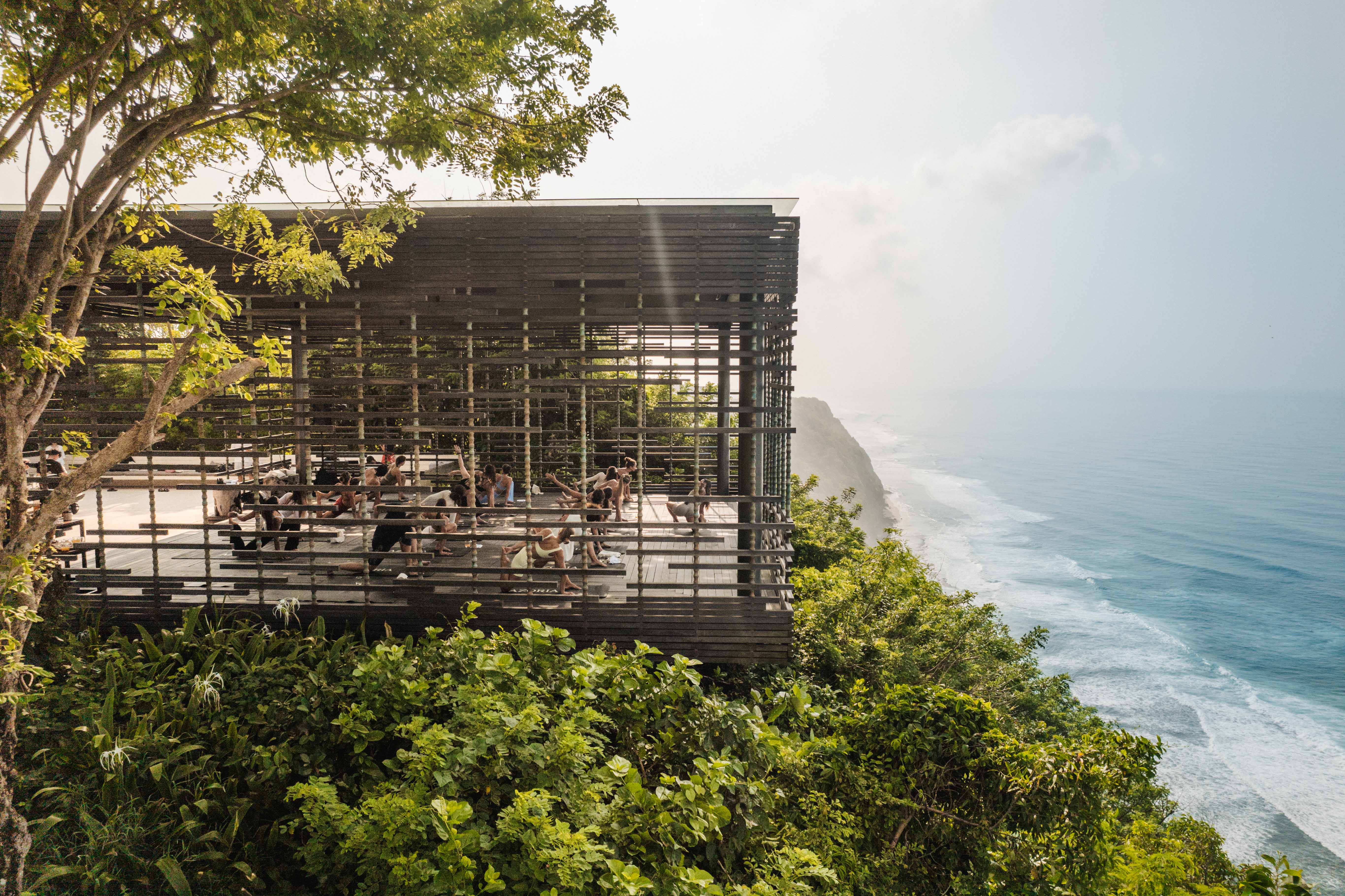
At Azoria, the wet season does not empty the calendar. The courts sit on the clifftops of Uluwatu, on the drier southern coast, and the rhythm of the house holds whatever the sky is doing: a morning match, a coffee after, a long afternoon that outlasts the rain. The game here was always meant to run all year. That is the point of a club rather than a fair-weather court.
When the rain does set in, the day simply moves indoors and onward. An hour at the Azoria Padel Academy sharpening the volley, then the sauna and the cold plunge at Azoria Wellness, then the long table at Azoria Dining while it pours outside. The Azoria Padel Club reads the weather the way the Mediterranean always has: as a reason to stay a little longer, not to go home.
Frequently asked questions
Can you play padel when it is raining?
In light rain on a well-drained court, yes. Stop when water pools, when the ball turns heavy, or when your shoes stop gripping. On a covered court you can play in any weather.
Is Bali's wet season a bad time to visit for padel?
No. The rain usually falls in a single afternoon burst and the mornings are often clear. Book a morning court, or a covered one, and the season barely affects your game. Crowds are thinner and prices lower than in July and August.
Do you need covered courts to play padel in Bali in the wet season?
They help. A covered or semi-indoor court makes padel genuinely all-weather, which is why many Bali clubs build them. On an uncovered court you can still play between showers, especially in the drier Uluwatu mornings.
Does rain damage padel rackets or balls?
A soaked ball goes heavy and dead and is best retired for the day. Rackets tolerate a little damp but should be dried and not left wet in a bag. Keep a dry ball and a towel courtside and the kit is fine.
What months are Bali's rainy season?
Roughly November to March, heaviest in December and January, easing through March. The Bukit and Uluwatu on the southern coast stay drier than inland Bali through all of it.
The hardest rain in Uluwatu rarely lasts an hour. You hear it arrive on the roof, you finish the set, and by the time the second drink is poured the cliffs are clear again and the courts are drying in the last of the light.
Further reading
International Padel Federation: the global governing body, for the rules and the shape of the modern game.
Honeycombers Bali weather guide: a clear month-by-month read on Bali's wet and dry seasons.
Can you play padel in the rain?: a practical explainer on wet-court play and when to stop.
Share:
Is Padel Good Exercise? What an Hour on Court Does
Recovery After Padel in Bali: The Hours That Matter