



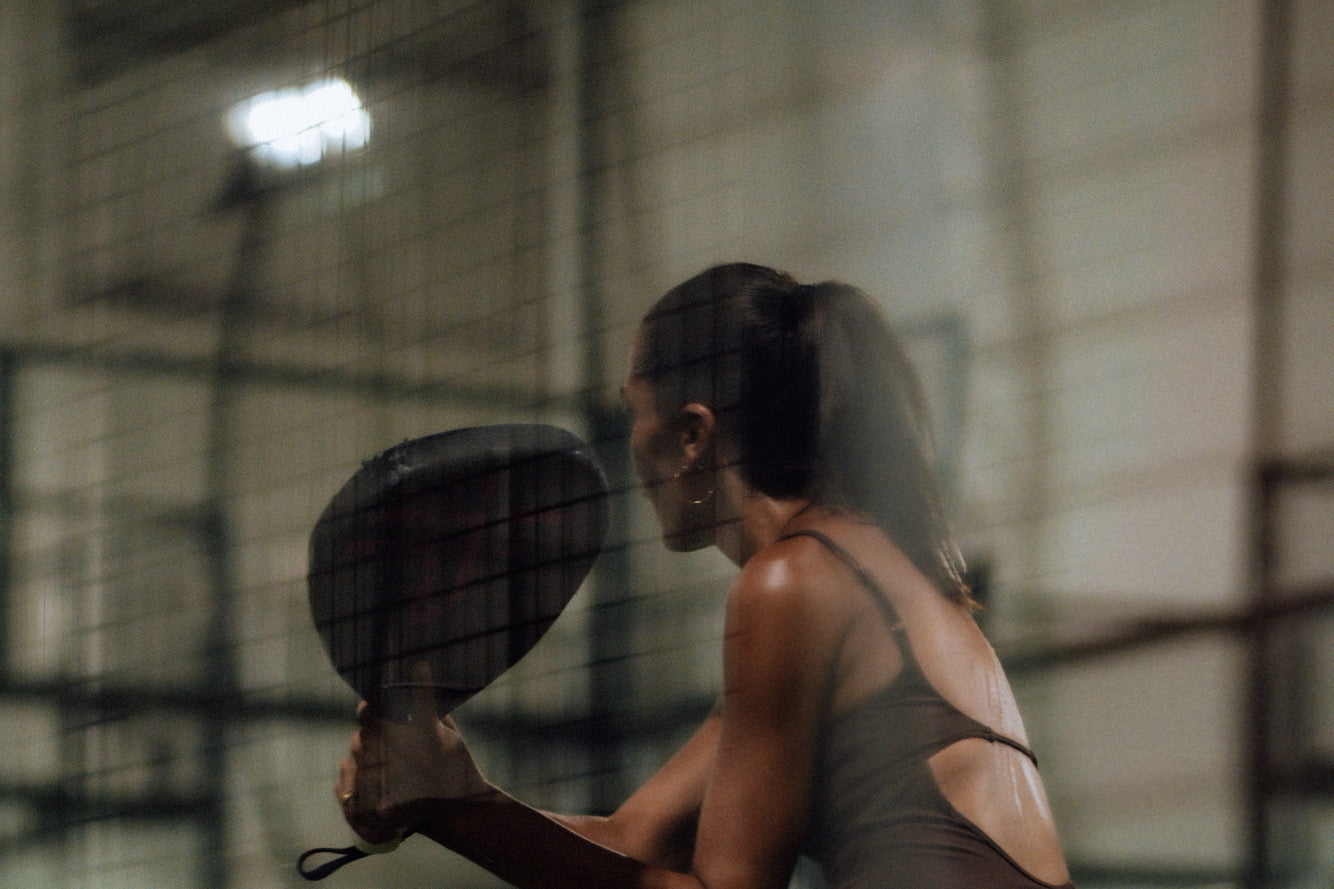
On a padel court, the score matters less than how you keep it. Padel etiquette is the set of small courtesies that make the game worth playing twice: arriving on time, calling your own faults, warming an opponent up rather than burying them, and saving the real conversation for the drink after. None of it is written into the rulebook. All of it is noticed.
The short version: Good padel etiquette comes down to honesty and consideration. Call the ball, own the points that touch your body or the glass, support your partner, never celebrate an opponent's mistake, and bring a fresh can of balls. Manners travel further than your smash.
What is padel etiquette?
Padel etiquette is the unwritten code players share: punctuality, honest line calls, a cooperative warm-up, encouragement for your partner, and restraint in celebration. The official rules govern scoring and serves. Etiquette governs everything the rules leave out, which on a court this small is most of the game.
It matters more in padel than in most sports because of the geometry. Four people stand inside a glass box of roughly twenty metres by ten, close enough to hear each other breathe. There is usually no umpire. The whole thing runs on trust and proximity, and a single sulk travels the full court. Padel grew faster than any racquet sport in the world precisely because it is social, so the manners are not decoration. They are the product.
The unwritten rules of padel
In short, seven courtesies carry almost every situation you will meet on court:
- Arrive early. A court booked for ninety minutes is ninety minutes, not the time left once you have laced your shoes.
- Warm the other side up. The knock-up is a gift, not a contest.
- Call every ball. "Mine" or "yours," out loud, on anything down the middle.
- Tell the truth. If the ball brushed your body or hit the glass before the floor, the point is yours to give away.
- Keep celebrations honest. Win your own points. Never applaud an opponent's double fault.
- Carry your partner. You play with them, not merely beside them.
- Bring the balls. A fresh can, offered before anyone asks, is the whole spirit of the game in one gesture.
How do you warm up in padel?
A padel warm-up runs about seven minutes and it is cooperative, not competitive. You feed clean, returnable balls, build from soft rallies to volleys and overheads, then finish with a few serves. The aim is to find rhythm together, not to win the match before it has started.

This is where most newcomers give themselves away. They treat the knock-up as the first set, hitting winners past a stranger who is still finding the bounce. Good players do the opposite. They hit to you, at a pace you can return, because a warm opponent makes a better match and a better afternoon. Feed the backhand if that is the side being warmed. Keep the ball alive. The seven minutes are an introduction, not an audition.
Honesty and line calls
In padel you call your own side, and you call against your own interest. If the ball touches any part of your body, even a sleeve, the point goes to your opponents. If it struck the glass before it bounced on your floor, the same. At club level there is rarely anyone to overrule you, so the game depends on players telling the truth when no one could prove otherwise.
The convention is simple and worth saying plainly: when in doubt, the call goes against you. Give the marginal ball to the other team. You will lose a point and keep something more useful, which is the standing invitation to play again. Padel records a remarkable detail in its own growth figures: more than nine in ten players come back after a first session. Reputations on a small island travel faster than that.
How do you be a good padel partner?
Padel is doubles, always, so the partner is half the game. The best one is calm, audible, and generous: calling balls early, taking the middle when it is theirs, and offering one good word after a missed shot rather than a long one after a won point. You cannot win a match alone. You can certainly lose the next invitation.

Read the room on the smash, too. Against friends or weaker opponents, burying every ball at someone's feet wins the point and loses the morning. The players worth knowing pick their moments and ease off when the match is already decided. There is a difference between competing and humiliating, and everyone on court can feel exactly where the line is.
Off the court: the longer drink after
The European clubs that gave us this game built it around what happens once the gate closes. The seven-minute warm-up, the long match, the longer drink after. Etiquette does not end at the last point. You shake hands at the net, you thank the pair you beat and the pair who beat you, and you sit down together while the heat goes out of the afternoon.

This is the part the house cares about most. At Azoria Padel Club, the courts open early and the table stays set late, because the match is only the reason people arrive. If you are still learning the rhythm, the coaches at the Azoria Padel Academy teach the manners alongside the mechanics, which is the faster way to belong on any court. Newer players will find the ground covered in our guide to starting padel in Uluwatu, and the wider home game in padel in Uluwatu. Afterwards, the long table is where the real conversation happens, and recovery is the quiet layer that lets you do it again tomorrow.
Frequently asked questions
What is the most important rule of padel etiquette?
Honesty. You call your own side, and when a ball is too close to judge, you give it to your opponents. The game has few umpires, so it runs entirely on players telling the truth against themselves.
Who calls the ball in padel?
You call balls on your own side of the net. On shots down the middle, call "mine" or "yours" out loud so two players do not swing at once. The pair nearest the ball usually has priority.
How long is a padel warm-up?
Around seven minutes, and it is cooperative. Feed returnable balls, move from rallies to volleys and overheads, then hit a few serves. Warm the other side up rather than trying to beat them before the match.
Is it rude to smash hard at your opponents in padel?
In a tournament, no, that is the game. In casual or mixed-level play, reading the room matters. Constantly burying the ball at a weaker opponent's body wins points and loses goodwill.
Do you bring your own balls to padel?
Yes. Offering a fresh can, or rotating who brings them, is basic padel etiquette. It is a small gesture that tells everyone you intend to be invited back.
The good players are not the ones who never miss. They are the ones you call again on Friday.
Further reading
- Rules of Padel, International Padel Federation: the official rulebook governing scoring, serves and the court, the backbone under the unwritten code.
- FIP World Padel Report 2025: the federation's annual analysis of the sport's growth, courts and players worldwide.
- The unwritten rules of padel etiquette, Red Bull: a clear, current run through court courtesies for new players.
Share:
What to Wear for Padel in Bali: Shoes, Kit and the Heat
A Padel Holiday in Bali: How to Plan the Trip