

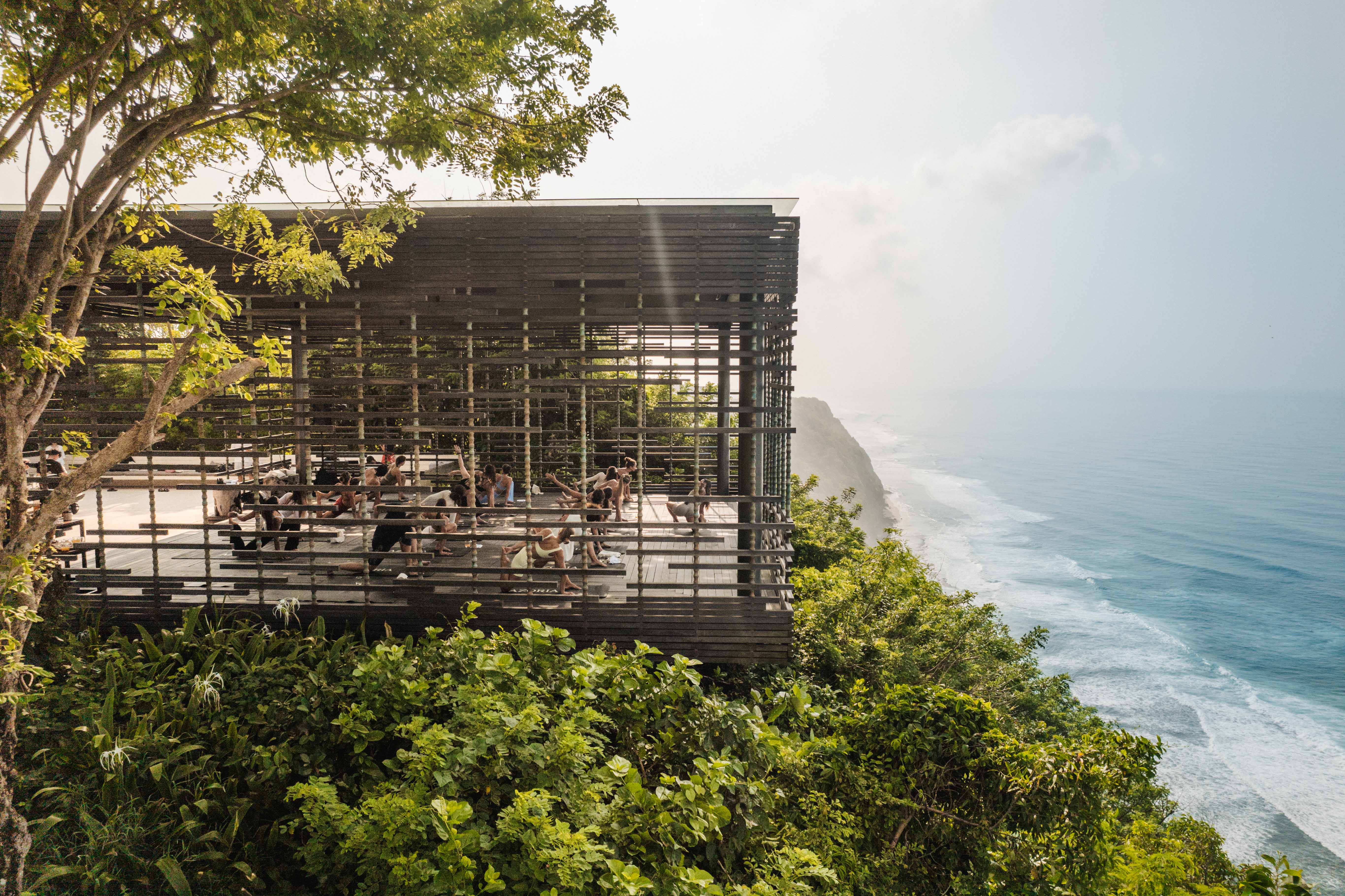

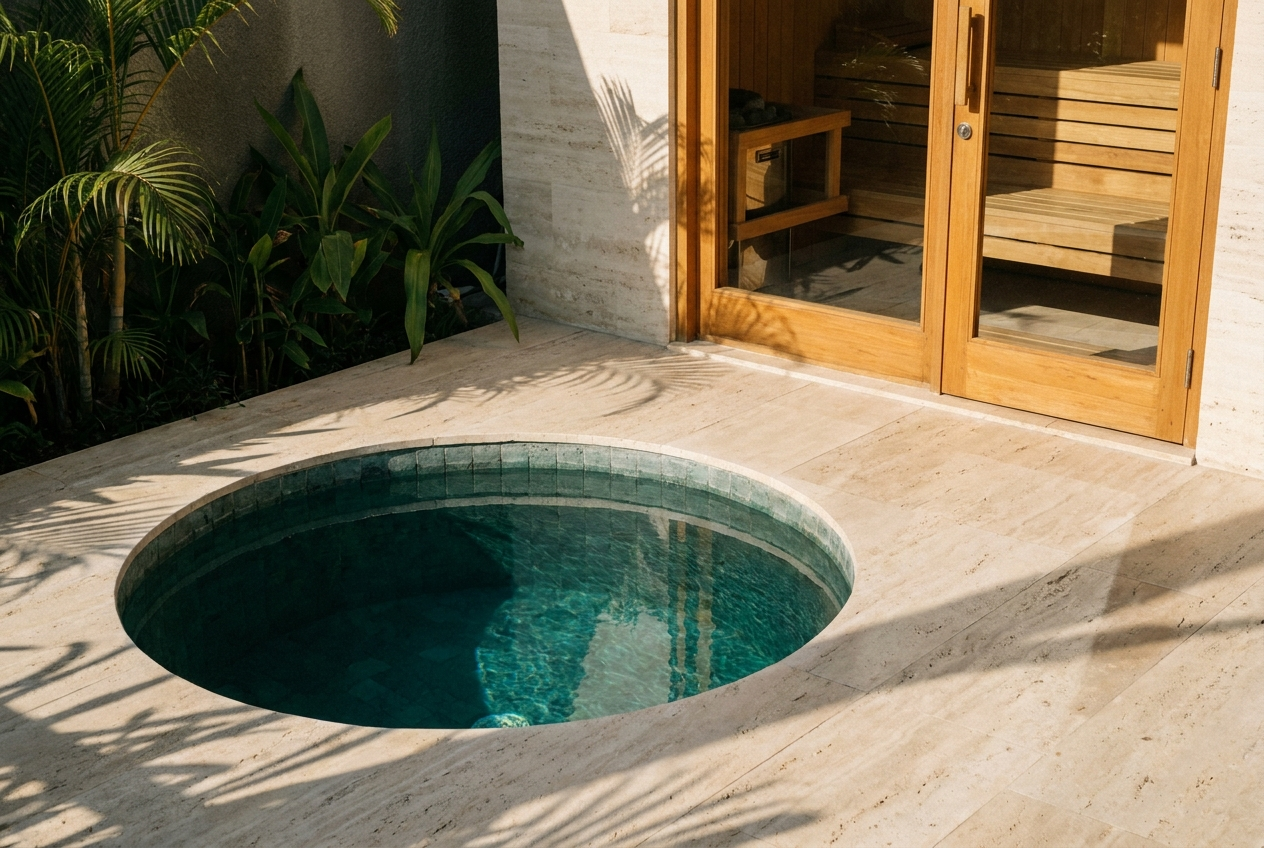
Hot, then cold, then hot again. Contrast therapy in Uluwatu has gone from a private habit among surfers and padel players to something the Bukit now builds rooms for. The idea is older than the trend: sit in real heat until the body opens, move to cold water until it closes, repeat, and let the swing between the two do the work. Done with patience, it is one of the quieter pleasures of a day on the cliff.
The short version: Contrast therapy means alternating heat (a sauna at roughly 80 to 100°C) with cold (an ice bath or plunge near 10 to 15°C), usually three to four minutes hot, one to three minutes cold, for three to five rounds, finishing on cold. On the Bukit you can do it at dedicated recovery rooms in Bingin and Pecatu, or at a clifftop spa above Uluwatu.
What is contrast therapy?
Contrast therapy is the practice of alternating hot and cold exposure in the same session, most often a sauna followed by an ice bath or cold plunge. The heat widens blood vessels and lifts the heart rate to something close to light cardio. The cold narrows them sharply. Move between the two and you create what practitioners call a vascular pump, blood pushed out to the skin in the heat and drawn back to the core in the cold.
The appeal is partly physiological and partly something simpler. After an hour of padel in the heat, or a long morning of surf, the cycle leaves you loose, clear, and oddly calm. The science is honest about its limits: the evidence for heat alone and for cold alone is stronger than the evidence for the two combined. What contrast adds, beyond the measured effects on circulation and perceived recovery, is a ritual that is hard to rush. You cannot do it on your phone.
A few effects are reasonably well documented. Heat triggers heat shock proteins and raises circulation. Cold sharpens alertness and lifts dopamine and norepinephrine, which is why people leave an ice bath talkative rather than sleepy. The combination is best understood as a recovery and mood ritual, not a cure for anything.
How do you do contrast therapy properly?
Start hot, finish cold, and do not turn it into an endurance test. A workable Uluwatu protocol is three to four minutes in the sauna, then one to three minutes in the cold, repeated for three to five rounds, ending on the cold. Most people settle on two to four sessions a week rather than daily.
A simple round-by-round protocol
| Step | Where | Time | Note |
|---|---|---|---|
| 1 | Sauna (80 to 100°C) | 3 to 4 min | Until you are properly warm, not gasping. |
| 2 | Cold plunge (10 to 15°C) | 1 to 3 min | Slow breath. Stay still; thrashing makes it colder. |
| 3 | Rest | 1 to 2 min | Let the heart settle before the next round. |
| Repeat | Full cycle | 3 to 5 rounds | Finish on cold, then dress warm and sit. |
Two practical notes for the tropics. First, the heat feels easier here than in Europe, so people tend to overstay it; let comfort, not the clock, end the round. Second, hydrate before and after, because you will sweat more than you think between rounds. Finishing on cold is the one rule worth keeping, both for the metabolic signal and because it leaves you alert for the rest of the day rather than half asleep.
If you are brand new to the cold, start at thirty seconds and build. The benefit is in turning up regularly, not in the heroic first plunge.
Where to do contrast therapy in Uluwatu
The Bukit now has several places to do this well, from a no-frills ice-bath room to a clifftop biohacking spa. A short, current list follows. Bali openings move quickly, so hours below are worth a check before you go.
Ice Break, Pecatu
A recovery room near Bingin built around the cold end of the spectrum: ice baths paired with red light therapy, plus a sauna for the hot side of the cycle. It sits on Jl. Labuansait in Pecatu and runs daily, roughly half past eight in the morning until seven in the evening. Sessions are short and unfussy, which is the point. Book the sauna ahead, as it is the busiest part of the room.
ATMOS, Uluwatu
A steam-led space that treats heat as a guided group ritual rather than a solo sit, drawing on banya and temazcal traditions, with a cold plunge that runs from merely cool to genuinely cold. Worth it if you want the social, ceremonial version of contrast rather than a clinical one.
The Istana, clifftop Uluwatu
One of the best-equipped options on the Bukit, a spa built for serious recovery with infrared sauna, cold plunge pools and a roster of biohacking tools. This is the high end of the local scene, suited to a deliberate recovery afternoon rather than a quick reset.
What is coming
The recovery suite is becoming standard kit for Uluwatu's new sport clubs rather than a separate errand. Liga.Tennis Uluwatu, for example, has announced a members' recovery suite with sauna and ice bath alongside its courts. The direction is clear: on the Bukit, sport and recovery are moving under one roof.

Contrast therapy and sport on the Bukit
This is where the ritual earns its place. Most people who keep a contrast habit in Uluwatu do it because they are also doing something demanding: surfing the reef at dawn, training in the heat, or playing the long social padel matches the island has become known for. The cold after a hard set does more for next-day legs than another beer at the bar, and it is a great deal more pleasant than it sounds once you are in.
We have written before about the hours that matter after a hard match, and about how to build a whole recovery day on the Bukit around heat, cold and quiet. Contrast therapy is the engine room of both. Play in the morning, recover in the afternoon, and the week holds together rather than fraying by Thursday.
The Azoria approach to recovery
At Azoria, recovery is not a separate appointment, it is part of the rhythm of the day. The house treats the Recovery Zone, sauna and ice bath, as a standard inclusion rather than an upsell: something you pass through after the courts or the gym, not a spa day you book weeks ahead. The padel courts open first, in late 2026, with the full wellness floor, thermal rooms, hammam and all, following in January 2027.
The thinking is borrowed from old European clubs more than from any wellness brand: you train, you sit in the heat, you take the cold, and then you stay for a long lunch. Recovery as the quiet layer underneath the sport, never the headline. When the Azoria Padel Club opens, the cold plunge will be a few steps from court three, which is rather the point.
Frequently asked questions
What is contrast therapy?
Alternating hot and cold exposure in one session, usually a sauna followed by an ice bath or cold plunge. The swing between heat and cold drives circulation and leaves most people feeling recovered and clear-headed.
How long should you stay in the ice bath?
One to three minutes is plenty for most people, and thirty seconds is a sensible start if you are new to it. Longer is not better; turning up two to four times a week matters more than any single long plunge.
Should you finish hot or cold?
Finish on cold. It is the more useful metabolic signal and it leaves you alert rather than drowsy for the rest of the day.
Where can you do an ice bath and sauna in Uluwatu?
Dedicated recovery rooms in the Bingin and Pecatu area combine ice baths, sauna and red light therapy, and there are clifftop spas above Uluwatu with infrared sauna and cold plunge pools. New sport clubs on the Bukit are increasingly adding sauna-and-ice-bath recovery suites of their own.
Is contrast therapy actually good for you?
The strongest evidence is for heat and cold used on their own; the combined effect is less studied but appears to help circulation, perceived recovery and mood. Treat it as a genuinely useful recovery ritual rather than a medical treatment, and skip it if you have heart or blood-pressure issues without a doctor's nod.
The sauna goes quiet, the plunge settles, and outside the light is going long over the cliff. That is the moment the whole thing is for.
Further reading
- Cleveland Clinic on cold-water immersion, a measured medical overview of what the cold does and does not do.
- WHOOP on contrast therapy and recovery, a clear explainer of the hot-cold mechanism for athletes.
- The Bali Sun on the Bukit's new sport-and-recovery clubs, context on the boom in integrated courts and recovery suites.
Share:
How to Spend a Week in Uluwatu
Reformer Pilates in Bali: An Uluwatu Guide