

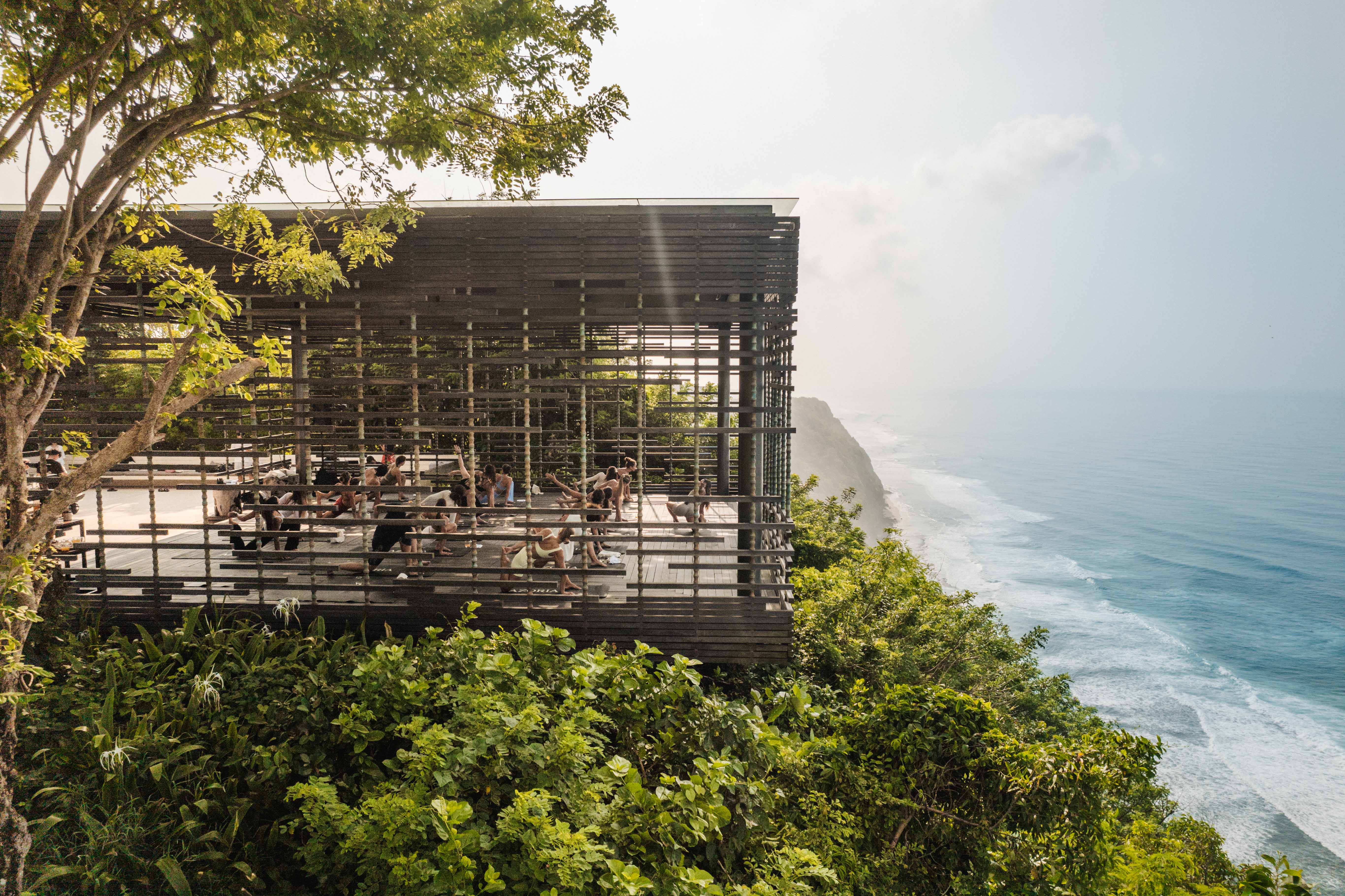

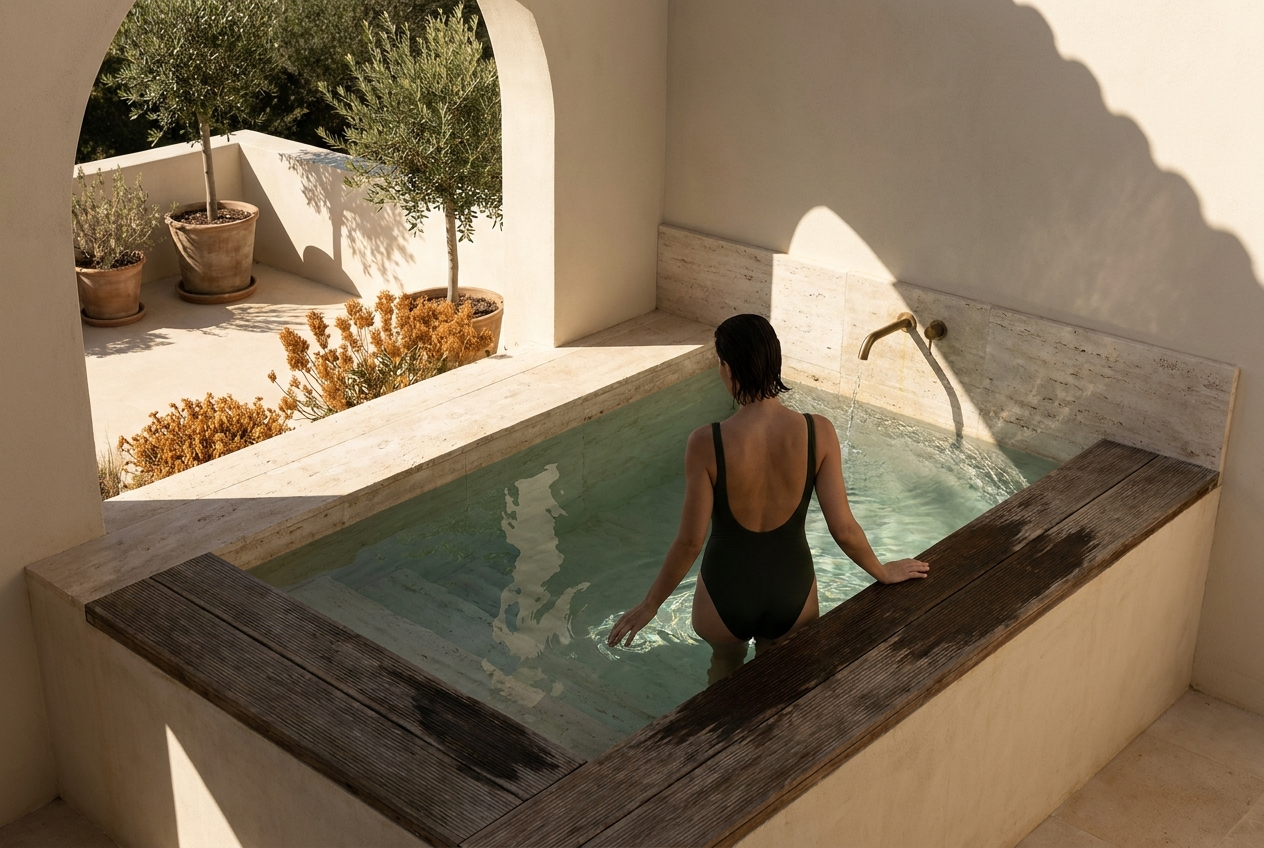
The hardest part of a recovery day is letting it be one. A proper recovery day in Uluwatu is not a spa appointment squeezed between two other things. It is the day itself: a sauna in the late morning, an ice bath in Bali's dry heat, a slow lunch, and the good kind of tiredness that comes from doing very little on purpose. The Bukit has quietly become one of the better places in Asia to do this well.
The short version: A recovery day in Uluwatu means heat first, then cold: ten to twenty minutes in a sauna or steam room, a short ice bath at roughly 10 to 15°C, and a long, unhurried afternoon to let the body settle. Several recovery spaces on the Bukit (Pecatu, Bingin, Ulu) now offer the full sauna and cold plunge set.
What is a recovery day, and why bother?
A recovery day is a day built around the things that help the body repair rather than the things that tax it: heat, cold, water, breath, sleep, and an early dinner. The point is not indulgence. It is that recovery is the half of training where the adaptation actually happens. You get stronger in the chair afterwards, not on the court.
For most people on the Bukit this follows effort. A dawn surf at Bingin, a long match on a padel court, a Hyrox session in the heat. The body has done its work; the recovery day is where it banks it. We treat recovery as the quiet half of performance, part of the daily rhythm rather than a separate event. Sport and recovery are one thing, not two.
There is real evidence underneath the ritual. A long Finnish cohort study found that men who used a sauna four to seven times a week had around half the risk of fatal cardiovascular disease of those who went once a week. That is an association in one population, not a prescription, and the heat does the heart no favours if you are unwell or pregnant. But the direction of travel is clear: regular heat is one of the better-studied recovery habits going.
In what order: hot, then cold?
Lead with heat, finish with cold. Warm the body first in a sauna or steam room, then move to the ice bath, and if you are doing contrast therapy, alternate the two. The cold is the harder discipline, so it earns its place at the end, when you actually want it.

The rough numbers, drawn from current recovery research rather than wellness folklore:
| Element | Temperature | Time | Notes |
|---|---|---|---|
| Sauna (dry) | 80 to 90°C | 15 to 20 min | Finnish-style; hydrate first. |
| Steam / hammam | 40 to 45°C | 10 to 15 min | Gentler heat, easier on the lungs. |
| Ice bath / cold plunge | 10 to 15°C | 2 to 5 min | Studies on soreness use 8 to 12 min; most people do less. |
| Contrast cycle | hot then cold | 3 to 4 rounds | A minute or two of cold per round, finish cold. |
The mechanism is plain. Heat opens the blood vessels, cold closes them, and alternating the two acts like a pump, moving blood and clearing the by-products of hard effort. A 2025 network meta-analysis put the useful cold-water window at around 10 to 15°C; colder is not automatically better, it is just colder. Breathe slowly through the first thirty seconds of the plunge. That part never gets easy, only familiar.
One honest caveat for the athletes. If your goal that week is to build muscle, an ice bath straight after a heavy lifting session can blunt some of the adaptation, so save the cold for rest days or skip it after strength work. After a match or a long run, where the goal is to feel human again tomorrow, plunge away.
Where can you take an ice bath and sauna in Uluwatu?
The Bukit now has a small, serious layer of dedicated recovery spaces, most within fifteen minutes of each other around Uluwatu, Pecatu and Bingin. A few that come up consistently, worth checking opening hours before you go since Bali venues move fast:
- Ice Break Bali (Pecatu) pairs a cold ice bath with red-light therapy in a no-fuss, recovery-first room.
- ULU Active and Recovery runs the full set: ice bath, cold plunge, steam room, and both infrared and traditional sauna in one space.
- Atmos Steam (Uluwatu) builds its sessions around guided communal steam in the banya and temazcal traditions, structured as a hot-and-cold contrast rhythm rather than passive sitting.
- SANTAI Recovery Spa has a stadium-style sauna behind glass and a round ice bath that takes eight to ten people, which makes it the social option.
The contrast across these places is the point. Some are clinical and quiet, some are communal and a little ceremonial. Go once to each and you will know within a session which kind of recovery suits you. We would steer first-timers toward a guided contrast session, where someone keeps time on the cold so you do not either bolt early or stubbornly stay in too long.
A recovery day, hour by hour
The structure that works on the Bukit is loose by design. Something like this:
Move early, while it is cool. A surf, a swim, an easy padel hit, or nothing more than a clifftop walk along the headland above Suluban. Eat properly mid-morning, protein and fruit, plenty of water. Take the heat and cold in the late morning or early afternoon, when the sun is high and the cold feels like a reward rather than a punishment. Then the long, slow part: lunch that is not rushed, shade, a book, a nap that you do not apologise for. An early dinner, light, and an earlier night. Nothing here finishes on the hour. That is the whole idea.

The dry season, roughly April to October, is the easy time to do this, with clear skies and hot afternoons that make the cold plunge land harder. But recovery is one of the few Bukit rituals that is genuinely better in the wet season, November to March, when the afternoon rain gives you permission to stay indoors and slow down.
A recovery day at Azoria
At Azoria, recovery is built into the architecture rather than bolted on. The Recovery Zone, with its sauna and ice bath, comes with every membership at no extra charge, because we think the hot-and-cold habit should be ordinary, not a treat you book twice a year. Upstairs, Tierra Spa holds the slower thermal set: hammam, salt room, steam, and a magnesium pool for the afternoons that ask for water rather than effort.
The logic is the rhythm of the house. A morning on the clay courts at the Azoria Padel Club, an hour of heat and cold after, then a long lunch at the table. The court earns the sauna; the sauna earns the afternoon. For the precise hours after a hard match, our guide to recovery after padel goes deeper on the first day, and the clifftop guide to padel in Uluwatu covers where the game itself is good.
A note on timing, since the house opens in stages. The Azoria Padel Club opens first, in autumn 2026. The wider house, including the Recovery Zone, Tierra Spa and the rest of the wellness floor, opens in January 2027. Until then, the Bukit's existing recovery spaces above are the place to build the habit.
Frequently asked questions
Is an ice bath actually good for you?
For recovery from hard exercise, yes: cold-water immersion at around 10 to 15°C reduces muscle soreness and helps you feel better the next day. The exception is straight after heavy strength training, where the cold can blunt muscle gains, so save it for rest days then.
How cold should an ice bath be, and how long?
Most people sit between 10 and 15°C for two to five minutes. Colder is not better, just harder. Studies on muscle damage use longer, eight to twelve minutes, but for general recovery a few honest minutes is plenty. Always finish on cold and breathe slowly through the first half-minute.
Should I do sauna or ice bath first?
Heat first, cold last. Warm up in the sauna or steam room, then take the plunge, and if you are doing contrast therapy, alternate three or four rounds and finish cold. The order lets the body relax into the heat before the harder work of the cold.
Where can I do contrast therapy in Uluwatu?
Several dedicated recovery spaces around Uluwatu, Pecatu and Bingin offer the full sauna and cold-plunge set, including communal guided steam sessions. Opening hours change often, so confirm before you go. From January 2027, Azoria's Recovery Zone and Tierra Spa will offer it as part of the house.
When is the best time of year for a recovery day in Bali?
Any time. The dry season (April to October) gives you hot afternoons that make the cold plunge feel earned, while the wet season (November to March) is quieter and indoor-friendly, which suits a slow recovery day well.
Heat, then cold, then a long afternoon with nothing in it. Do it once properly and the rest of the week moves differently.
Further reading
- Cold water immersion dosing: a 2025 network meta-analysis. The current science on how cold, and how long, for recovery.
- Sauna bathing and cardiovascular mortality (Finnish cohort study). The long-running research behind regular heat and heart health.
- Sauna and ice bath in Bali's wellness culture. A wider look at the island's recovery scene.
Share:
Padel vs Pickleball: Two Games, Two Tempos
Padel Shots, Explained: Bandeja, Vibora and Walls