

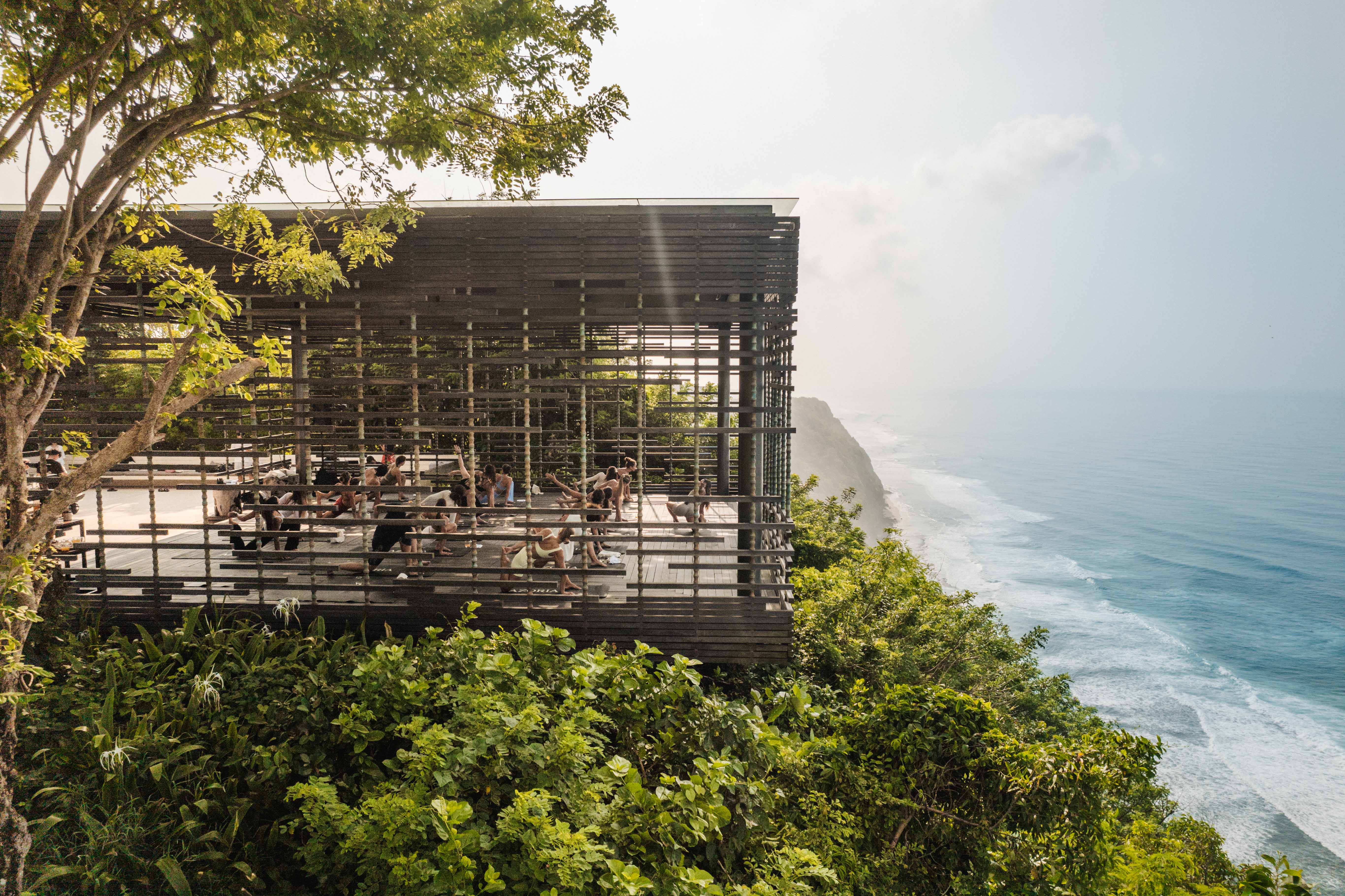

A long match leaves a mark. Two hours of accelerations, lunges and overhead smashes, played in tropical heat, and the body asks for something back. Recovery after padel is the part most players skip and the part that decides how the next morning feels. Done well, it is quiet and almost pleasant: water, shade, a cold plunge, an early night. Here is how to do it in Uluwatu, where the sun is honest and the afternoons are long.
The short version: Recover after padel by cooling down and rehydrating with electrolytes in the first hour, then using contrast therapy (a sauna followed by a cold plunge) and gentle mobility over the next day. In Bali heat, drink more than you think and rest in the shade before anything else.
What does a padel match do to the body?
Padel looks gentle and is not. A match is built from short, sharp efforts: explosive starts, hard stops, changes of direction, and the rotation of the smash. One study of match play found players cover close to 3,775 metres, perform more than 600 accelerations, and hold an average heart rate around 143 beats per minute. The load lands on the calves, hips, lower back and shoulder. That is why the soreness the next day tends to sit in the legs and the racket-arm shoulder rather than anywhere you expected.
None of this is a problem. It is the point. But the intermittent, stop-start nature of the game is exactly the kind of effort that produces delayed muscle soreness, and exactly the kind that responds well to a proper cool down rather than a slammed car door and a scooter ride home.

How do you recover after a padel match?
Start in the first hour. Walk for five minutes before you sit, drink water with electrolytes, eat something with protein within roughly thirty to forty-five minutes, then stretch the hips, calves and shoulders gently while the body is still warm. That window, the hour after the last point, does most of the work.
The order matters more than the effort. A short, easy walk keeps blood moving through the legs and clears the by-products of all those sprints, which is more useful than collapsing onto a bench. Hydration comes next, and in Bali it is not optional. Then food: the post-match refuel is when muscle repair begins, so protein and a little salt earn their place. The long, slow stretch comes last, when the muscles are loose and warm, never forced.
This is also the most civilised part of the game. The longer drink after is a padel tradition for a reason. A cold drink, shade, and conversation at the side of the court is recovery too, the social kind, and it is no accident that it sits at the centre of how the house plays. A good meal afterwards does more for you than a protein gel in a hurry; the kitchen at Azoria Dining exists partly for this.

Recovering in the Bali heat
Heat changes the maths. In Uluwatu's humidity, sweat evaporates slowly, so the body cools less efficiently and you lose more fluid and salt than the same match would cost you in Europe. The practical answer is to drink ahead of the game, not just after it: roughly half a litre in the two to three hours before play, then steadily through the match, then electrolytes (sodium, potassium, magnesium) rather than plain water once a session passes an hour.
A few honest specifics for the Bukit. Play early or late, not at midday, when the clifftop sun is at its hardest. Find shade immediately after the last point rather than standing in the open. And respect the dry season: from April to October the skies are clear and the heat is real, so the rehydration window is wider than first-time visitors expect. If you are building a trip around the courts, the timing notes in our guide to planning a padel holiday in Bali are worth a read before you book.

Sauna, ice bath, and the recovery stack
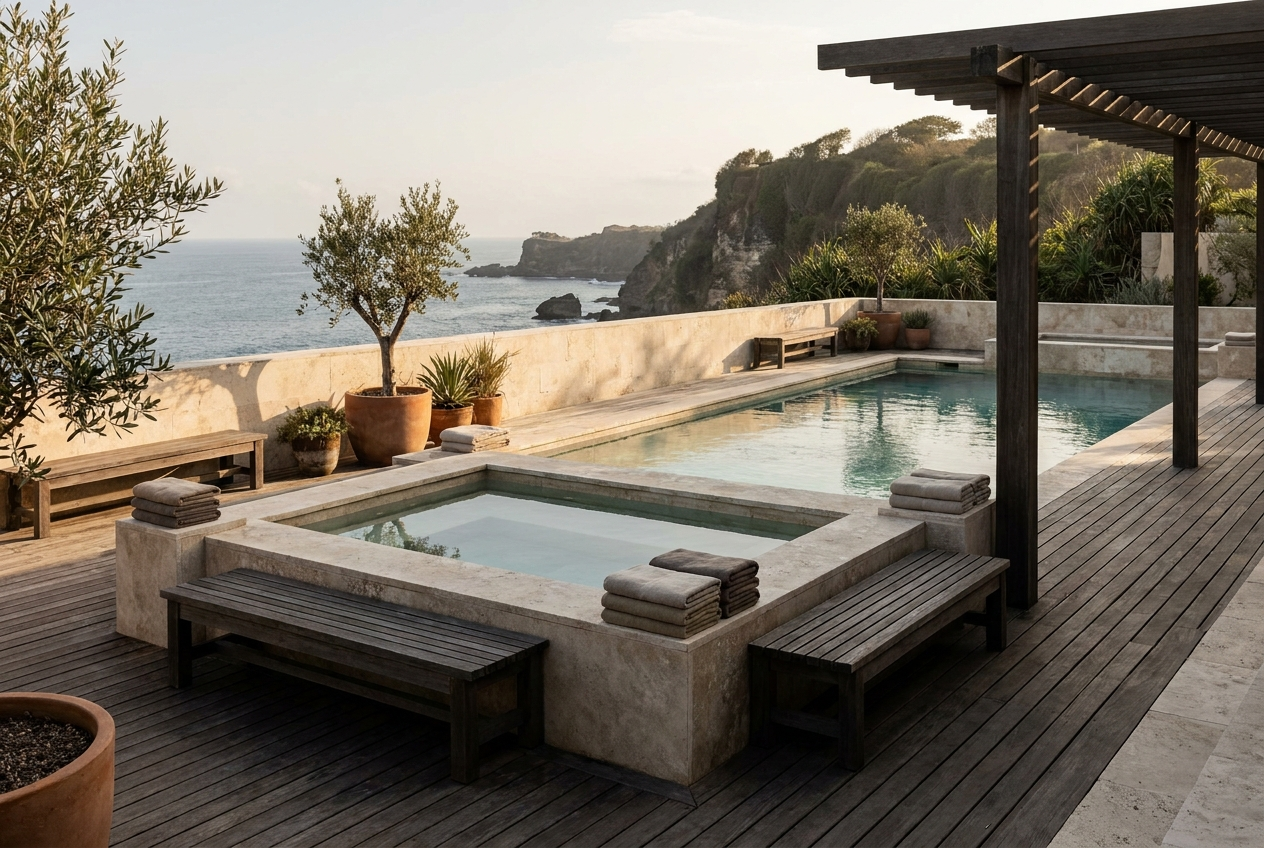
The most effective tool after a hard match is contrast therapy: a spell in the sauna followed by a cold plunge, repeated. Heat opens the blood vessels, cold closes them, and alternating the two creates a pumping effect that helps move fluid and clear the soreness of the day. Reviews of the research give it moderate support for reducing muscle soreness and restoring how the muscles feel and function after hard exercise. Recent work suggests a cold plunge does not need to be punishingly cold to work: water around 11 to 15 degrees is enough.
One caveat worth knowing. If your session was heavy strength work rather than padel, a cold plunge straight afterwards can slightly blunt the muscle-building response, so on pure gym days, leave a gap. After padel, contrast therapy is a clean win.
The full recovery stack the house keeps is simple and old-fashioned: sauna, cold plunge, a quiet room, breath. Nothing here is a cure, and nothing needs to be. A standing recovery ritual after sport is the difference between a body kept as an instrument and a body run into the ground. You can read how we think about it at Azoria Wellness.

The day after: gentle movement, not rest
The morning after a long match, do something easy rather than nothing. A slow swim, a walk along the cliffs, a light reformer session: active recovery keeps the blood moving and clears soreness faster than lying still. The aim is circulation, not effort. Twenty unhurried minutes is plenty.
Mobility is the part padel players neglect most. The hips and the shoulder take the load, so they are where a few minutes of daily mobility pays off, on and off the court. A short reformer or mobility session the day after a hard game does more for your padel than another match would. Sleep does the rest. It is the most underrated recovery tool there is, and the long Uluwatu afternoon is built for the nap that precedes the early night.

Recovery, the Azoria way
At Azoria Padel Club, recovery is not a separate appointment. It sits inside the rhythm of the day: the court at sunrise, the long drink after, the sauna and the cold plunge in the afternoon, an early dinner at the long table. Coaching at the Azoria Padel Academy includes how to warm up and cool down properly, because a player who recovers well plays more, and plays longer into the years. New to the game and not sure where to begin? Start with our guide to padel for beginners in Uluwatu, then the clifftop guide to the game.
Frequently asked questions
How long does it take to recover after padel?
Most of the recovery happens in the first hour through cooling down, rehydrating and eating, with full muscle recovery taking roughly 24 to 48 hours after a hard match. Soreness peaks the day after and eases with gentle movement.
Should I use an ice bath after playing padel?
Yes, an ice bath or cold plunge after padel can reduce muscle soreness, and it works best as contrast therapy paired with a sauna. The water does not need to be extremely cold; around 11 to 15 degrees is enough to help.
What should I eat and drink after a padel match?
Rehydrate with water and electrolytes, then eat protein with a little salt within about thirty to forty-five minutes. In Bali's heat, replace more fluid than you think you need and favour an electrolyte drink over plain water after an hour of play.
Why am I so sore after padel?
The soreness comes from the sport's stop-start efforts: the accelerations, hard stops and overhead smashes load the calves, hips and shoulder. It is normal delayed muscle soreness and fades faster with a proper cool down, mobility and sleep.
Is it bad to play padel every day in the heat?
You can play daily if you recover well between sessions, but in Bali's heat, hydration and rest decide whether that is sustainable. Alternate hard matches with lighter, active-recovery days and listen to the shoulder.
The last point lands, the heat lifts, and the afternoon opens up. Water, shade, a cold plunge, an early night. The game gives you tomorrow back if you ask for it properly.
Further reading
International Padel Federation is the sport's governing body, for the rules, the court and the global game.
Physiological responses and fatigue in padel matches is a study of what a match actually costs the body.
Cold water immersion and muscle recovery is a meta-analysis on dose, duration and temperature.
Share:
Is Padel Good Exercise? What an Hour on Court Does
Galungan in Bali: What It Is, and How to Be There