

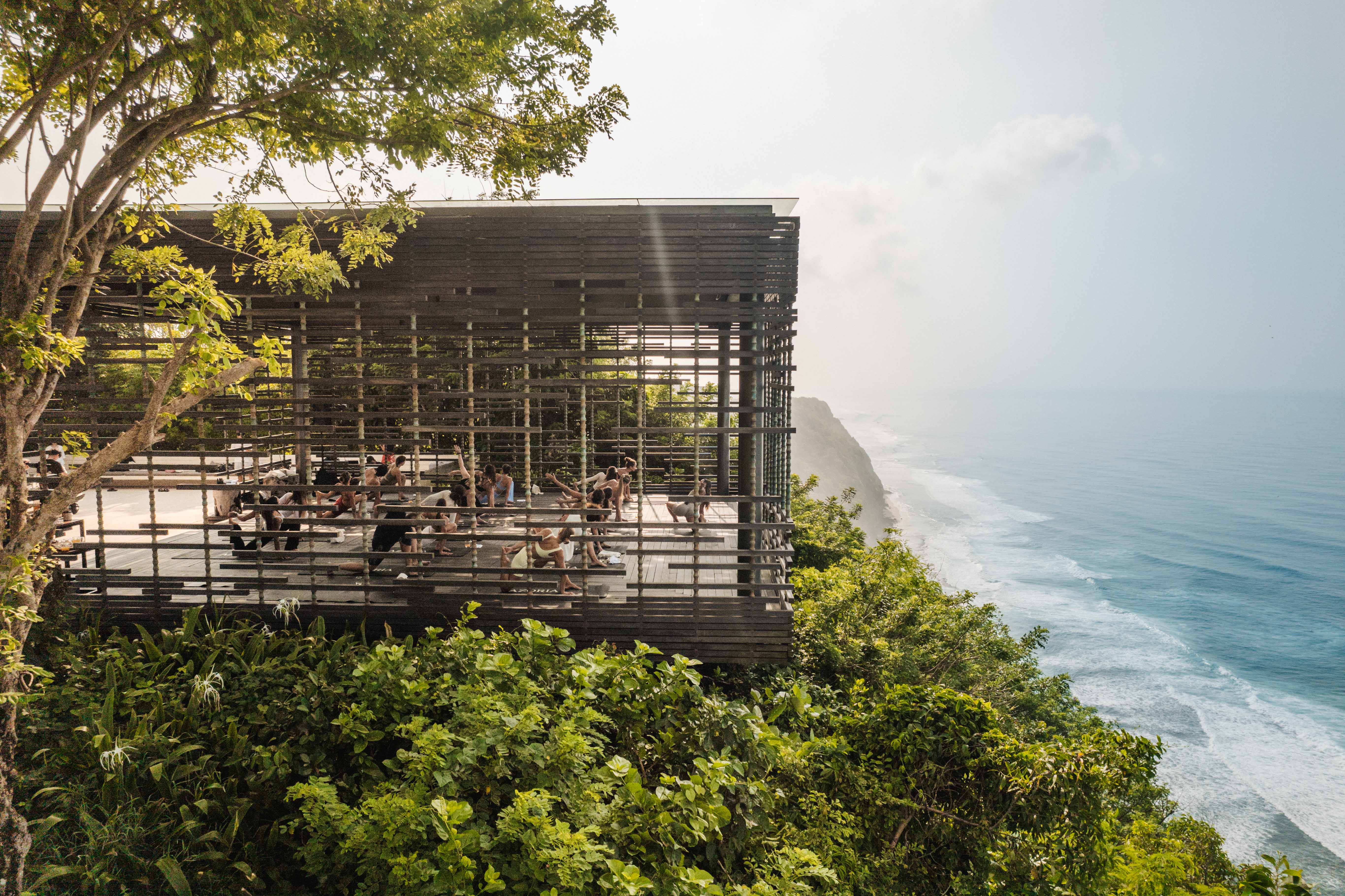

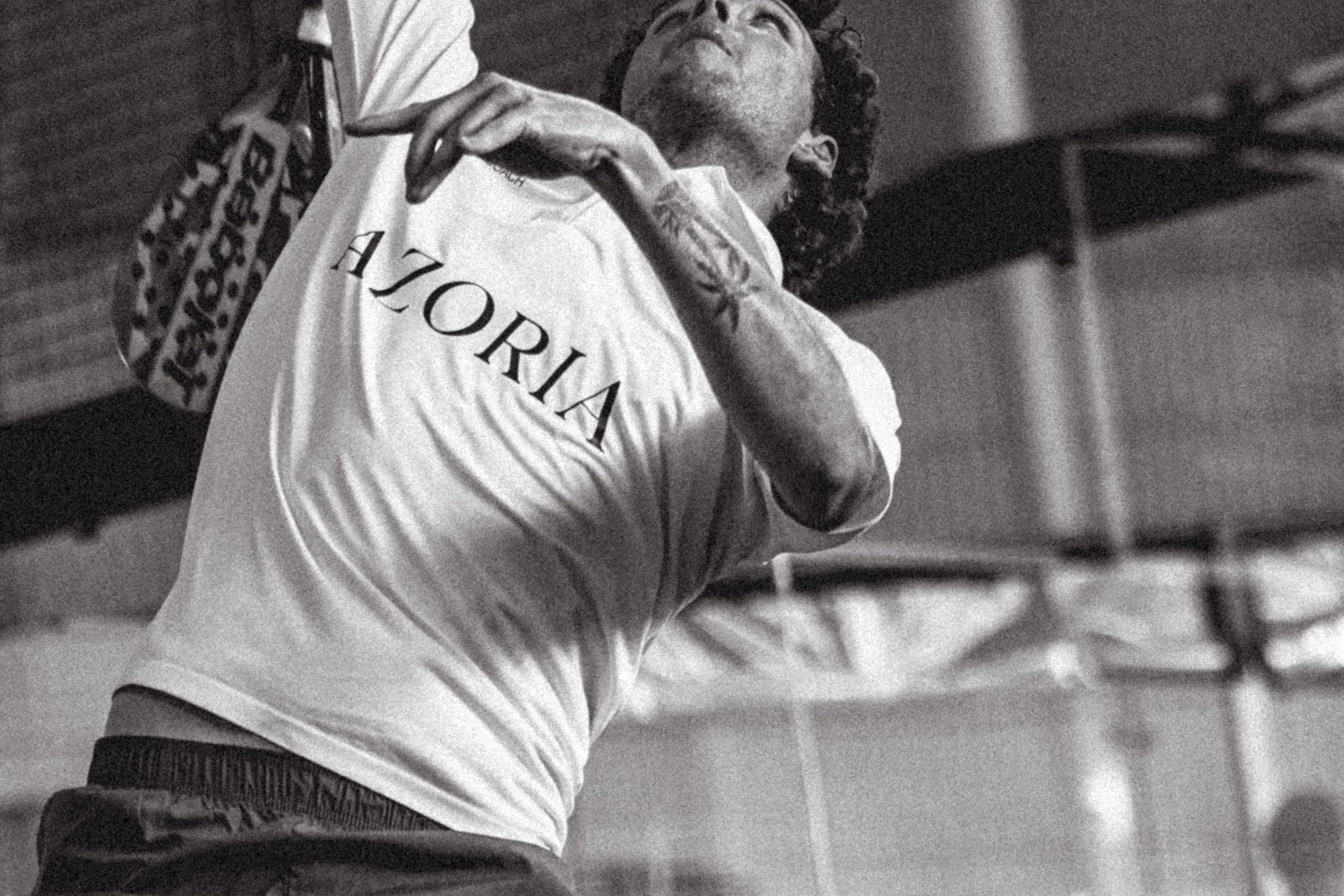
Uluwatu has always been a place people come to move. Surf at dawn, a long lunch, the slow afternoon. Padel fits the rhythm of the Bukit so naturally it feels as though the clifftop was waiting for it. The fastest-growing racquet sport in the world arrived in Bali and found, in Uluwatu, a home with the right manners: European in spirit, social by design, played hard and finished over a drink.
The short version. Padel is a doubles racquet sport played on an enclosed court with glass walls that stay in play. It is easy to start and hard to master, and the social side is the point. In Uluwatu you can play all year, the courts hold up through the wet season, and the best hours are early morning and the cool of late afternoon.
What is padel, and why has it found a home in Uluwatu?
Padel is a doubles game played on a court about a third the size of a tennis court, enclosed by glass and mesh that remain in play. You serve underhand, the scoring follows tennis, and rallies run longer because the walls keep the ball alive. It rewards placement and timing over brute force, which is exactly why it suits a long afternoon and good company.
The sport carries a Spanish and Italian club culture with it: the warm-up, the match, the table afterwards. Uluwatu has changed in step. What was a surfers' outpost a decade ago is now where people who might otherwise winter in Lisbon or Ibiza spend the dry season, and padel has become the way many of them keep the day in motion. The Bukit gave it cliffs, sea air and a crowd that already understood the idea of sport with manners.
When to play in Uluwatu
Two things decide when you play here: the season and the hour. Bali's dry season runs roughly April to October, with the clearest skies and the busiest courts. The wet season, November to March, brings warm afternoon rain, but padel is the reliable sport in those months because the courts are built for it and a passing storm rarely stops a match.
For the hour, follow the heat rather than fight it. The morning court before the sun has weight, or the cool of late afternoon into sunset, are the two windows worth keeping. Play at noon and you will spend more time with the water than the ball.
What a good session looks like
The shape of a good padel afternoon is older than the sport's arrival in Bali. The seven-minute warm-up, the long match, the longer drink after. Padel is generous that way. Four people, an even game, and a court small enough that conversation carries across it. The score matters while you are playing and is forgotten by the time the glasses arrive.

That is the part newcomers underestimate. You come for the exercise and stay for the table. It is less a workout to be logged than a way to spend a few hours with people whose company you keep.
Padel for beginners: how a point works
If you have never picked up a padel racquet, you can play a real point within the hour. The basics:
- Serve underhand. Bounce the ball once, then strike it below waist height into the diagonal box. No thunderous tennis serve required.
- Use the walls. After the ball bounces on your side, it can come off the glass and still be in play. Let it come off the wall and take it on the rebound.
- Play position, not power. Padel is a game of angles and patience. Place the ball, move with your partner, wait for the opening.
- Win the net. The team that takes and holds the net usually takes the point. Get forward together.

The first game is the steepest part of the curve. By the second you are rallying, and by the third you understand why people rebook before they leave the court. If you would rather skip the awkward opening, a few sessions at the Azoria Padel Academy shorten it considerably.
What to bring
Less than you would think. A pair of padel shoes with a herringbone sole for grip on the turf is the one thing worth owning, though court shoes will do to start. Light cotton, water, and a hat for the morning sun. Racquets and balls are usually on hand to borrow or hire, so a first session asks nothing of you but the hour. Court hire across Bali typically runs around US$25 an hour, so it is an easy habit to keep. For the full kit list, see what to wear for padel in Bali.
The courts at Azoria Padel Club
Azoria sits on the cliffs of Uluwatu, west-facing, a Mediterranean house built around four worlds. Padel is one of them. The Azoria Padel Club is European racquet culture translated into Bali: dark olive courts, cricket cream, espresso panelling, and a long table close enough that the match runs straight into lunch. It is a members' house rather than a court for hire, built for people who want the game and the afternoon that follows it, from the courts through to the sauna and ice bath.

If that is the kind of padel you are looking for in Uluwatu, the rest of the house tends to follow: the reformer at eight, coffee on the terrace, a glass at seven.
Frequently asked questions
Where can you play padel in Uluwatu?
Padel has grown quickly across the Bukit, with courts through Pecatu, Bingin and the wider Uluwatu area. Azoria Padel Club offers clifftop courts as part of a members' house rather than a pay-by-the-hour court.
Is padel good for beginners?
Yes. Padel is one of the easiest racquet sports to start. The underhand serve and the walls make rallies last, so most people are playing real points within their first hour.
How much does padel cost in Bali?
Court hire in Bali typically runs around US$25 an hour, with equipment often available to borrow or rent. Members' clubs work differently, on membership rather than hourly hire.
What should you wear to play padel?
Light, breathable clothing and padel shoes with a herringbone sole for grip on the turf. Bring water and a hat if you play in the morning sun.
When is the best time of year to play padel in Bali?
The dry season, roughly April to October, is the most popular. Padel is playable year round, though, since the courts hold up well through the wet-season afternoons.
Court three opens at six. The rest tends to follow.
Further reading
- International Padel Federation — the global game, its rules and its calendar.
- Padel, an overview — the history of the sport and how it spread.
- Padel across Bali — the wider island scene, courts and communities.
Bagikan:
Padel for Beginners: How to Start in Uluwatu
Padel vs Tennis: The Differences That Matter