



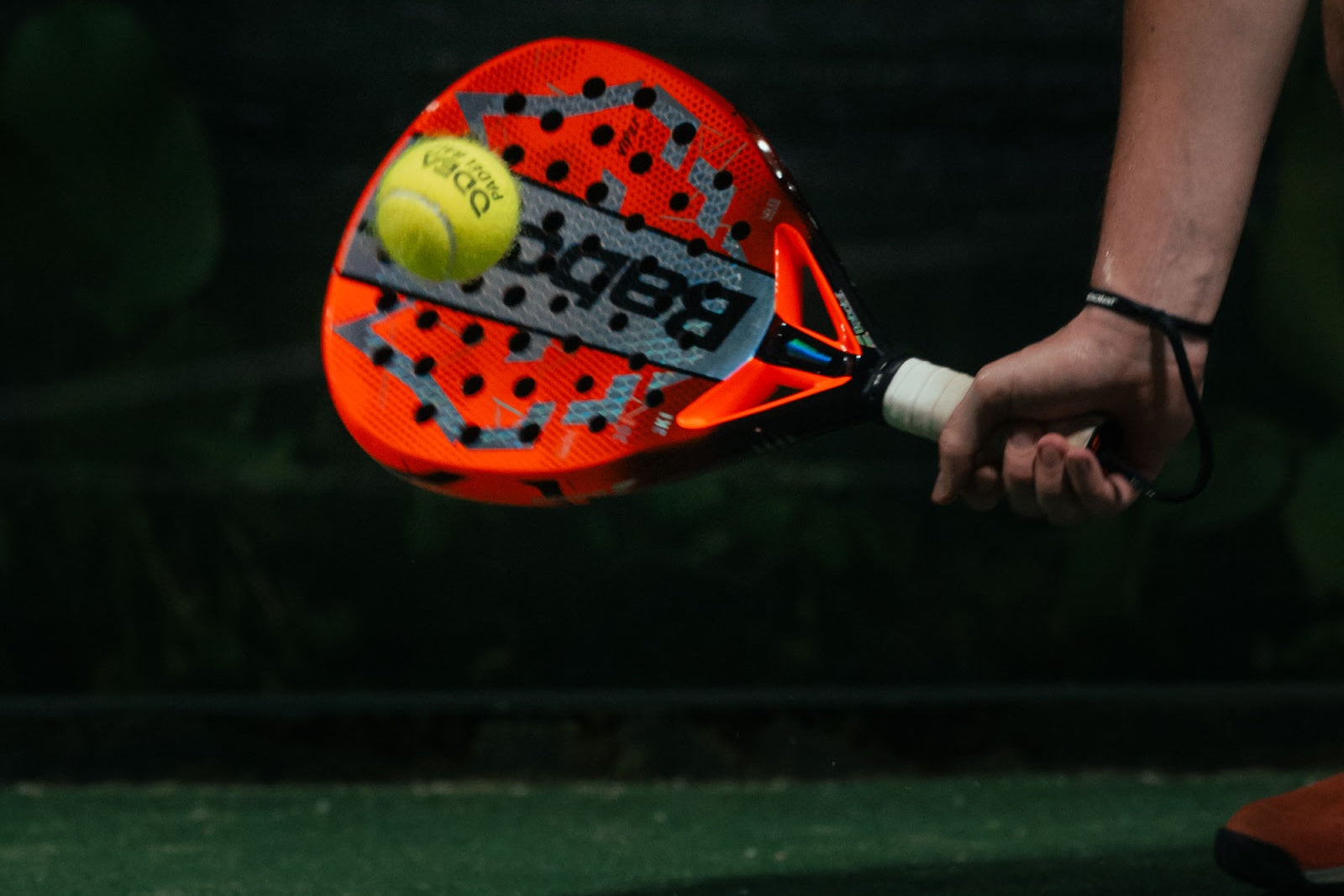
A first padel racket should be forgiving, not fast. The best padel racket for a beginner is round in shape, light in the hand, soft under the ball, and head-light for control. Get those four right and the rest is preference. Spend less than you think, borrow before you buy, and let the racket flatter your swing while you learn the game. Here is how to choose well, without the noise.
The short version: For your first padel racket, choose a round head, a weight around 355 to 370 grams, a soft EVA or foam core, and a low (head-light) balance. That combination gives the largest sweet spot, the easiest handling, and the kindest feel for the arm while you learn.
What makes a good beginner padel racket?
A good beginner racket is built around tolerance, not power. You want the widest possible sweet spot, a weight you can swing late in a long match, and a soft feel that protects the elbow. In practice that means a round head, a low balance, a soft core, and a flexible face. Everything below is detail on those four decisions.
| Spec | Beginner choice | Why it helps |
|---|---|---|
| Shape | Round | Largest sweet spot, most control |
| Weight | 355 to 370 g | Easy to swing, less arm strain |
| Balance | Low (head-light) | Manoeuvrable and forgiving |
| Core | Soft EVA or foam | Comfortable, absorbs shock |
| Face | Fibreglass or soft carbon | Flexible, gentle on the arm |
| Price | Around €120 to €200 | Quality without overspending |
Padel rackets are solid and perforated, not strung like a tennis racket, and the international rules cap them at 45.5 cm long, 26 cm wide and 38 mm thick, with a cord that ties to the wrist. Within those limits, the differences that matter to a beginner are shape, weight, balance and materials.
Padel racket shape: round, teardrop or diamond?
For a beginner, choose round. The three head shapes move the sweet spot and the weight to different places: round is the most forgiving, diamond is the most demanding, and teardrop sits between them.

A round racket carries its sweet spot in the centre of the face, where a learner actually makes contact. The balance sits low, near the handle, so the head feels light and the racket turns quickly in the hand. That is control, and control is what lets you keep the ball in play long enough to enjoy the point.
A diamond racket pushes the sweet spot and the weight toward the tip. It rewards a fast, clean swing with more power, and punishes a late or off-centre one with a jarring miss. It is a racket to grow into, not to start with. A teardrop shape is the all-round compromise, a sensible second racket once your timing settles, but the round head is the one to learn on.
How heavy should your first padel racket be?
Aim for 355 to 370 grams. Padel rackets generally run from about 340 to 390 grams. Lighter frames are easier to manoeuvre at the net and put less strain on the wrist and elbow, which matters more than it sounds when you are playing two hours in the heat.

Lighter players and those worried about the arm can sit at the lower end, around 350 to 360 grams. A stronger player who has held a racket before can go to 365 to 370. Heavier than that and a beginner tends to swing late, lose control and ache the next morning. When in doubt, go lighter. You can always add a touch of weight with grip tape later; you cannot easily take it away.
Balance: why head-light suits beginners
Balance is where the racket carries its weight, and for a first racket you want it low, toward the handle. A head-light racket feels nimble, reacts faster at the net, and forgives the half-second of late timing that every learner has. A head-heavy racket stores power in the tip for the player who can already find it, but in new hands it feels slow and unwieldy. Round rackets are almost always head-light by design, which is another reason the round head is the honest beginner choice.
Core and face: the feel under the ball
Two materials decide how a racket feels: the foam core inside and the surface on the face.

The core is usually EVA rubber or softer foam. A soft core gives a gentler, more comfortable contact that absorbs shock and looks after the arm, which is what a beginner wants. A hard EVA core returns more power and a firmer, faster response, better suited to a player who already swings cleanly.
The face is typically fibreglass or carbon. Fibreglass flexes more, feels softer and costs less, a friendly surface to learn on. Carbon is stiffer, more durable and more powerful, and it carries the higher price. A soft carbon face is a fair middle ground, but there is no shame in starting on fibreglass. The wrong combination, a stiff carbon face on a heavy, head-heavy frame, is the classic route to a sore elbow. Soft and light is the kinder education, and the same care you would give your body after a match.
How much should you spend on a first padel racket?
Plan on around €120 to €200. Quality padel rackets broadly span €150 to €300, and the temptation runs both ways. Spend under about €80 on an unbranded racket and the feel and durability rarely support good technique. Spend €280 and up and you are buying a stiff, powerful competition frame that will fight a beginner rather than help one.
The truth most shops will not lead with: a forgiving, comfortable racket helps you improve faster than any high-performance spec. Buy for the player you are now. The better racket can be a reward for the player you become, and by then you will know exactly what you want from it.
Choosing a padel racket for Bali's heat
Two things change when you play padel in the tropics, and neither is the racket itself. Humidity attacks your grip, and heat attacks your gear.

Hands sweat far more here than in a European club, so the overgrip does the real work. A dry-feel or perforated overgrip pulls moisture away and keeps the handle from turning in your palm; bring a couple and change them often, because they wear out faster in the damp. The racket itself asks for one discipline: keep it out of direct sun and out of a hot car. A padel racket left baking on a back seat can soften and warp its foam core, and the heat finishes off an overgrip in an afternoon. Store it in its cover, in the shade, and it will outlast the climate. Solid rackets have no strings to restring, so beyond the grip there is little to maintain. What to wear for the heat is its own subject, covered in our guide to padel kit and shoes in Bali.
Try a few before you commit
The surest way to choose is to play with several rackets before you buy one. Spec sheets describe a racket; your own arm judges it. An afternoon swapping between a round and a teardrop, a 355 and a 370, tells you more than any chart.
That is the quiet advantage of learning at a club. At the Azoria Padel Club in Uluwatu you can borrow a racket, take a few games against the glass, and feel the difference between control and power in your own hand before you spend anything. A morning with one of the coaches at the Azoria Padel Academy will also tell you, honestly, what your swing needs now, which is worth more than the brand on the frame. If you are still finding your feet, start with our guide to padel for beginners in Uluwatu, or read why padel is not tennis if you are arriving from the other court.
Frequently asked questions
What is the best padel racket for a beginner?
A round-shaped racket with a low (head-light) balance, a weight around 355 to 370 grams, a soft EVA or foam core and a flexible face. That gives the largest sweet spot and the most forgiving feel while you learn.
Is a round or diamond padel racket better for beginners?
Round. It places the sweet spot in the centre of the face and keeps the balance low for control. Diamond rackets shift weight and the sweet spot toward the tip for power and suit advanced players with a fast, clean swing.
How much should a beginner padel racket cost?
Around €120 to €200. Below roughly €80 the quality rarely supports good technique, and above €280 you are paying for stiff competition frames that are harder for a beginner to use.
How heavy should a beginner's padel racket be?
About 355 to 370 grams. Lighter frames are easier to handle and gentler on the wrist and elbow. Lighter players can sit nearer 350; go lighter rather than heavier if unsure.
Do I need a carbon racket to start?
No. A fibreglass or soft carbon face is more flexible and comfortable for learning. Full stiff carbon adds power and durability for stronger, more advanced players, at a higher price.
A racket is a small decision dressed up as a large one. Choose the forgiving one, look after it in the heat, and spend the saved attention on the game. The court is where the improvement happens, not the checkout.
Further reading
Official Rules of Padel, International Padel Federation (FIP) — the governing body's regulations, including the legal dimensions of a racket.
How to choose a padel racket, Playtomic — a clear, brand-neutral primer from the sport's largest booking platform.
How to choose your padel racket, Decathlon — a practical retailer guide to shapes, weights and materials.
Share:
Is Padel Good Exercise? What an Hour on Court Does
Recovery After Padel in Bali: The Hours That Matter