



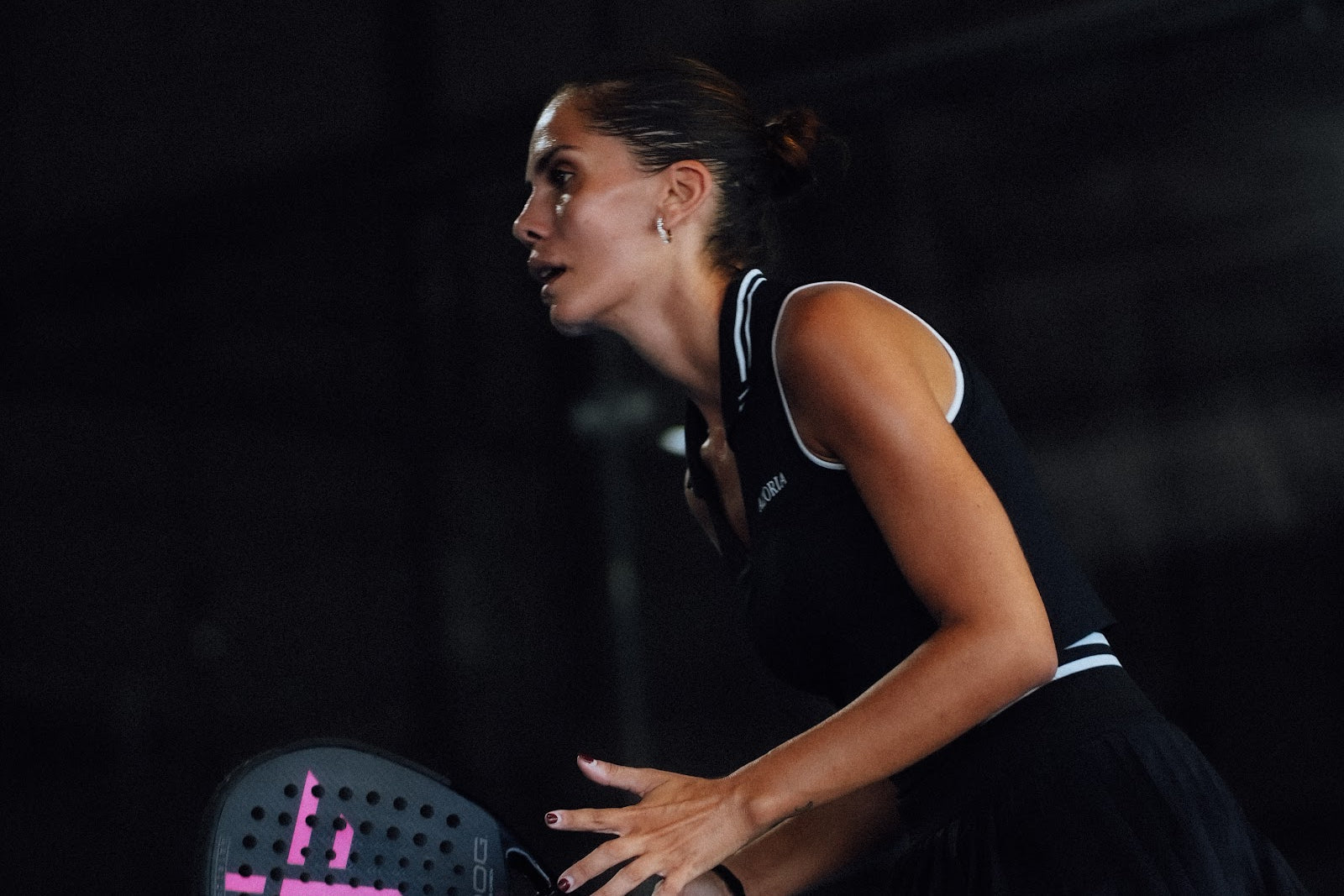
Padel is one of the gentler racquet sports, and it still finds a way to leave a mark. The elbow twinges, the shoulder tightens, the knee complains the morning after a long set. Most of it is avoidable. Padel injuries come almost entirely from three things: a cold start, a poor grip, and too much play with too little recovery. Fix those, and the game stays kind to you for years. Here is how, from a house that treats the warm-up as part of the match.
The short version: Avoid padel injuries by warming up properly before every match, using the right grip and racket, and managing how often you play. The most common problems are the elbow, shoulder and knee. Nearly all of them respond to preparation, technique, and recovery rather than treatment after the fact.
How common are padel injuries?
Padel is low-risk as racquet sports go, but not risk-free. Research puts the injury rate at roughly three per 1,000 hours of training and eight per 1,000 matches, lower than tennis or squash for most players. The catch is volume. Padel is addictive and social, so people play four and five times a week, and the injuries that show up are overuse injuries, the slow kind that arrive from repetition rather than a single bad step.
Surveys of recreational players tell the same story from the other direction: a large share report having had at least one padel-related niggle, with one study finding more than half had picked something up in the previous six months. None of that should put you off. It simply means the game rewards players who prepare, and quietly punishes the ones who turn up cold and play until something gives.
What are the most common padel injuries?
The most common padel injuries land in the elbow first, then the shoulder in the upper body, and the knee in the lower body. Tendons take the brunt, followed by muscles. The pattern makes sense once you watch a match: the wrist and forearm absorb every ball, the shoulder drives the overheads, and the legs handle the stops, turns and lunges on a short court.
| Area | What tends to go wrong | Where it comes from |
|---|---|---|
| Elbow | Padel elbow (tendon pain on the outer elbow) | Racket vibration, late contact, gripping too hard |
| Shoulder | Rotator cuff strain, impingement | Repeated overheads, the smash and the bandeja |
| Knee | Ligament and cartilage strain | Sudden stops, twisting, lunging for low balls |
| Calf and ankle | Strains and sprains | Cold starts, quick changes of direction |
| Lower back | Stiffness and strain | Rotation, reaching, poor warm-up |

Two useful facts sit inside that table. Tendon problems make up close to half of all padel injuries, which is why they build slowly and respond to load management rather than rest alone. And the elbow leads the list by a distance, which brings us to the injury every padel player eventually asks about.
What is padel elbow, and how do you prevent it?
Padel elbow is the sport's signature complaint. The medical name is lateral epicondylitis, the same condition tennis players know, and it is a wear injury to the extensor tendons that attach to the bony point on the outside of the elbow. It comes from the small, repeated shock of the ball hitting the racket, made worse by gripping too tightly, meeting the ball late, and a stiff backhand.
The good news is that padel elbow is largely a preventable problem, and the fixes are cheap. Three matter most.

Get the grip right
Hold the racket like a bird: firmly enough that it will not fly away, gently enough that you do not crush it. A relaxed grip is the single biggest protector of the elbow, because a tense forearm transmits every vibration straight into the tendon. Check the grip size too. There should be a small gap between your fingertips and the base of your palm when you hold the handle; too thin and the hand overworks to keep the racket steady.
Choose a forgiving racket
Weight, balance and vibration absorption are not marketing. A heavy, head-heavy racket with a stiff face sends more shock into the arm on every hit, which is exactly what a beginner's elbow does not need. A lighter, softer, more balanced frame is the sensible starting point. We go through this in detail in our guide to choosing your first padel racket, and it is worth reading before you buy on looks.
Meet the ball in front
Late contact is where the elbow suffers. If you hit the ball level with or behind your body, the forearm takes a load it was never meant to carry. Meeting the ball out in front, with the shoulder and trunk turning through the shot rather than the wrist flicking at it, spreads the work across the bigger muscles. This is technique, and it is why an hour with a coach early on pays off for a decade. The Azoria Padel Academy builds sound mechanics from the first session, partly because good technique is the best injury insurance there is.
The seven-minute warm-up
The warm-up is the part almost everyone skips and the part that prevents the most injuries. Turning up cold and going straight into a fast rally is how calves tear, ankles roll and shoulders complain, especially on the first hard smash. Seven minutes is enough. Do it every time.
- Raise the heat, two minutes. A light jog on the spot, some skips, a few side shuffles. You want to be lightly warm, not tired.
- Move the joints, two minutes. Arm circles, shoulder rotations, hip openers, gentle trunk twists. Dynamic movement, not held stretches, which belong after the game.
- Wake the shoulder, one minute. Slow air swings of the smash and the volley, working up to full range. The shoulder needs the most notice before the first overhead.
- Move like the game, two minutes. A few sprint-and-stops, some lunges, a short knock-up hitting soft before you hit hard. The last minute is where the body learns it is about to change direction quickly.

That sequence, in that order, covers what the research keeps confirming: dynamic warm-ups and a little balance and strength work cut injury rates meaningfully, and skipping them is the clearest way to get hurt. Cold muscles do not stretch, they snap. Seven minutes buys you the whole afternoon.
Strength, mobility and playing in the heat
Prevention off the court matters as much as anything you do on it. A little strength and mobility work makes the whole system more robust: strong legs and hips protect the knees, a stable shoulder handles the overheads, and mobile ankles cope with the stop-start footwork. Two short sessions a week is plenty. A strength session and some mobility work do more for your longevity in the game than another match would.
Then there is load. Overuse injuries come from doing too much, too soon, with too little recovery, so alternate hard matches with lighter days and give a sore elbow or shoulder the rest it asks for rather than playing through it. Our guide to recovery after padel covers the hours that matter most.
Two specifics for Uluwatu. First, wear real court shoes. Running shoes are built to go forwards; padel is played sideways, and a shoe with proper lateral grip and support is the cheapest ankle and knee insurance you can buy. We cover this in what to wear for padel in Bali. Second, respect the heat. In the tropics you dehydrate faster, cramp sooner and lose focus late in a match, and a tired body is a body that gets hurt, so drink ahead of play and not just after it.
Playing the long game, the Azoria way
At Azoria Padel Club, injury prevention is not a poster on the wall. It is built into how the day runs: the warm-up before the first point, the coaching that fixes technique before it becomes a habit, and the recovery that follows the match rather than being an afterthought. When something does flare, Health Center physiotherapy is in the same building, and the recovery zone, with its sauna and cold plunge, is part of every membership rather than an extra.
The players who last are rarely the strongest. They are the ones who warm up, hold the racket lightly, and know when to rest. New to the game? Start with our guide to padel for beginners in Uluwatu, then work on the habits in improving your padel in a week. Play well, and the game gives you decades.
Frequently asked questions
Is padel bad for your joints?
No more than most sports, and less than many. Padel is lower-impact than tennis or squash, and the joint complaints that do appear, mainly the elbow, shoulder and knee, are largely preventable with a proper warm-up, a relaxed grip and sensible recovery between sessions.
What is the most common padel injury?
The elbow, specifically padel elbow (lateral epicondylitis), a wear injury to the tendons on the outer elbow. It leads the list of padel injuries by a clear margin, ahead of shoulder and knee problems, and it is usually caused by gripping too hard, meeting the ball late, or a racket that passes too much vibration into the arm.
How do I stop my elbow hurting after padel?
Loosen your grip, check that your racket is not too heavy or stiff, and meet the ball in front of your body rather than behind it. Warm the forearm up before playing, ice it after a hard session if it is sore, and rest it properly rather than playing through pain. If it persists, see a physiotherapist.
Do I really need to warm up before padel?
Yes. Most padel injuries, from calf strains to rolled ankles to shoulder pain on the first smash, happen to cold bodies. A seven-minute dynamic warm-up before every match is the single most effective way to avoid them.
How often can I play padel without getting injured?
As often as you recover well. Overuse is the main cause of padel injuries, so alternate hard matches with lighter days, add a little strength and mobility work, and listen to any elbow or shoulder that is grumbling before it becomes a genuine problem.
The best players in a club are rarely the ones who never stop. They are the ones still on court at sixty, racket held lightly, warmed up, in no hurry.
Further reading
- Epidemiology and prevalence of injuries in padel (scoping review), a broad academic overview of what the research knows about where padel players get hurt.
- International Padel Federation, the sport's governing body, for the rules and the wider game.
- NHS on tennis elbow, a plain-English guide to lateral epicondylitis, the same condition padel players call padel elbow.
Share:
A Padel Weekend in Bali After the Singapore Grand Prix