



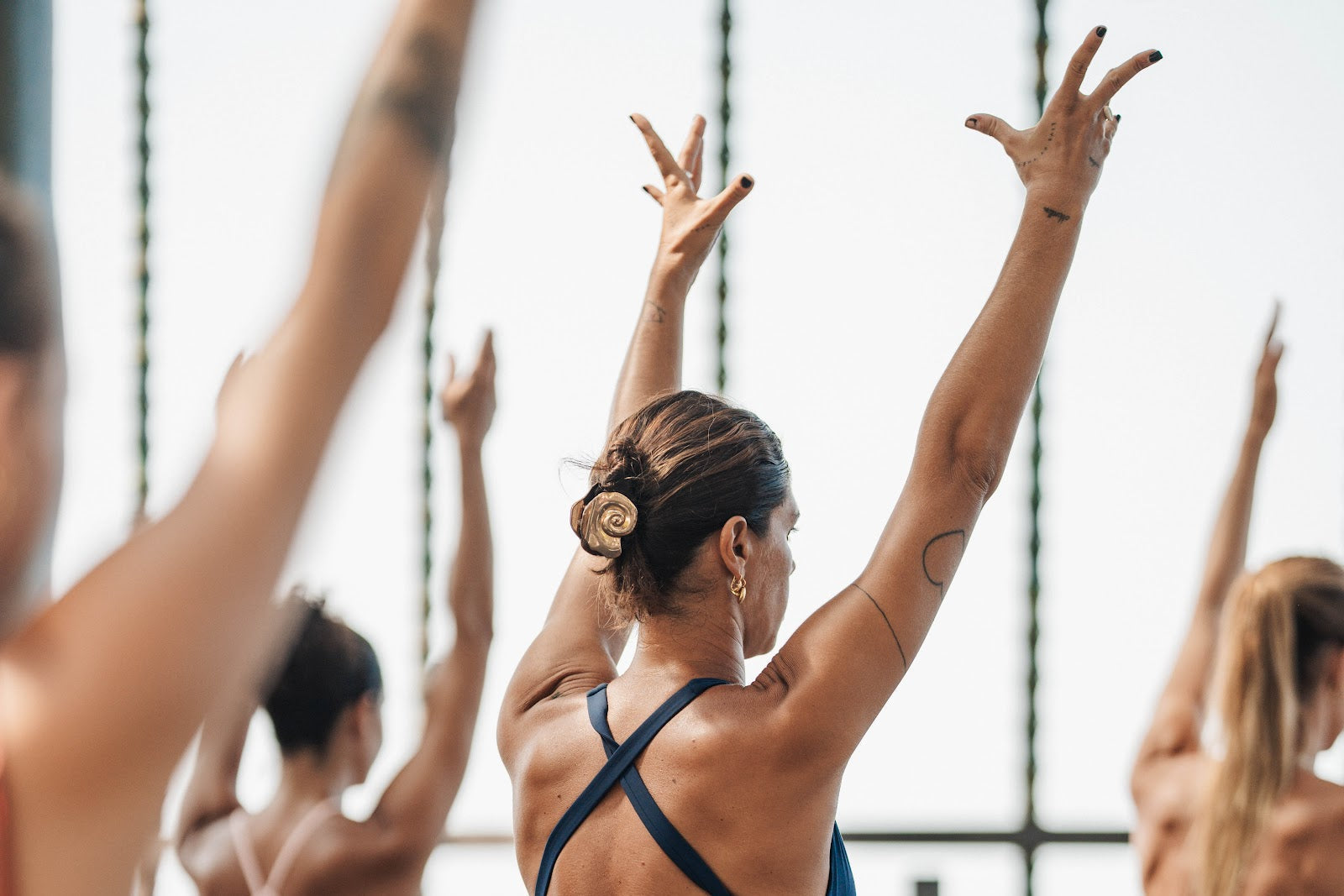
Most surfers train the wrong thing. They chase paddle fitness and leave the joints stiff, then wonder why the pop-up is late and the shoulder aches by the third session. Mobility for surfers is the quieter work: opening the hips, the thoracic spine and the shoulders so the body can get into the positions the wave asks for, and hold them without strain. On the Bukit, where the swell runs clean for half the year, that difference decides how much of the season you actually spend in the water.
The short version: The four areas that matter most are hips, thoracic spine, shoulders and ankles. Hips and ankles give you a fast, low pop-up; a mobile mid-back and healthy shoulders give you an efficient paddle and protect the rotator cuff, the joint surfers injure most. Ten minutes before you paddle out is enough to change a session.
What mobility does a surfer actually need?
A surfer needs range in four places: the hips, the thoracic spine (the mid-back), the shoulders, and the ankles. Everything a session demands, paddling flat for twenty minutes, snapping to your feet in one motion, twisting off the bottom, comes back to those four. Strength matters, but strength without range is a car with the handbrake on.
The paddle is the part people underestimate. It is a repetitive overhead motion, thousands of strokes a session, and the shoulder is the area surfers injure most. A peer-reviewed review of chronic shoulder complaints in surfers, published in Sports Medicine - Open, traces "surfer's shoulder" to exactly this: tight internal rotators, weak external rotators, and a stiff upper back that forces the rotator cuff to compensate. Mobility is not stretching for its own sake. It is injury insurance for the joint you cannot afford to lose.
The pop-up starts in the hips
A clean pop-up is a hip problem before it is anything else. To bring both feet under you in one motion, you need to load into something close to a deep squat and rotate the hips open, fast, without the lower back rounding to cover for a joint that will not move. If the hips are locked, the feet land wide or late, and the wave has already gone.
Two things build it. The first is a pain-free deep squat you can actually sit in, heels down, chest up. The second is active range through the hip flexors and rotators, the tissue that shortens from sitting, from scooters, from the flight over. A kneeling hip-flexor stretch with the arms overhead, held and then driven forward gently, opens the front of the hip that a long day closes. Add a 90/90 rotation on the floor, switching the shins side to side, and you train the internal and external rotation a turn demands.
Ankles belong here too, quietly. Stiff ankles throw the squat backward and the pop-up off balance. A few minutes of loaded dorsiflexion, knee tracking over the toe against a wall, buys more than it costs.

Paddle power lives in the shoulders and the mid-back
Efficient paddling needs a shoulder that moves through a full arc and a thoracic spine that rotates and extends. When the mid-back is stiff, the shoulder over-reaches to find the catch, the scapula tilts, and the cuff takes load it was not built for. The fix is not more shoulder stretching. It is a mid-back that does its share.
Three movements do most of the work. Thoracic rotations on all fours, one hand behind the head, elbow reaching under and then opening to the ceiling, restore the twist. Open-book rotations lying on your side, top arm sweeping across and back, do the same with the shoulder relaxed. And a gentle extension over a foam roller across the upper back undoes the paddle-and-desk slump that flattens the curve. For the shoulder itself, controlled external rotation, band or light weight, builds the muscles that keep the joint centred. Prevention research on the surfer's shoulder points to precisely this combination: extension and rotation through the upper back, plus external-rotator strength.
A ten-minute routine before you paddle out
Do this on the sand, or on the deck before the drive down. It is dynamic, not a long static hold, because you are preparing to move, not winding down.
- Cat-cow, 10 slow reps. Wake the spine, segment by segment. Breathe into the round and the arch.
- Open-book rotations, 6 each side. Follow your hand with your eyes. Feel the mid-back turn, not the low back.
- Kneeling hip-flexor stretch with reach, 30 seconds each side. Arms overhead, hips pressing forward, ribs down.
- 90/90 hip switches, 8 each side. Sit tall, rotate both shins across, no hands if you can.
- Deep squat hold, 30 to 45 seconds. Sink in, heels down, pry the knees open with the elbows.
- Band external rotations, 12 each side. Elbow pinned to the ribs, slow out and slower back.
- Wall ankle rocks, 8 each side. Knee over the toe, heel glued down.
Ten minutes. The pop-up comes earlier and the shoulder holds up deeper into the session. Do it before every paddle-out for a fortnight and the change is not subtle.
When to train it: reading the Uluwatu swell
The Bukit runs on a schedule, and mobility work should sit inside it. Uluwatu is at its world-class best from April to October, when Southern Ocean groundswell meets offshore south-easterly trade winds that blow clean across the cliff from sunrise until late morning. Peak is June to August. The shoulder months, April to May and September into October, bring the same swell with fewer people on it and warmer water, close to 28 degrees.
Uluwatu is not one wave but a run of reef sections, The Peak, Racetrack, Temples, Outside Corner and the Bombie, which means something is usually breaking somewhere across the tide. During the dry season that is most mornings. A surfer here is loading the shoulders and hips daily for months, which is exactly why the daily mobility habit matters more on the Bukit than it does somewhere you surf twice a month. Consistent range is what lets you take the whole season, not half of it. In the wet season, November to March, the crowds thin and the body gets its window to build strength and mobility for the next run of swell.

The quiet layer, at the house
At Azoria, movement is the rhythm of a day, not a project, and mobility is the layer under all of it. The Azoria Fitness Club programmes range and control alongside strength, so the body arrives at the reef ready rather than raw. An hour on the reformer at the Azoria Pilates Club trains the hip and spine control a pop-up leans on, breath and posture included. And the session does not end when you leave the water: the sauna, the cold plunge and the unhurried afternoon at Azoria Wellness and the Recovery Zone are where mobility is kept, not just found. We think of it the way we think of a recovery day in Uluwatu: the least glamorous hour, and often the one that decides the week.
There is an overlap worth naming. The same open hips and rotating spine that clean up a pop-up also serve the rotational sports next door, which is part of why our members drift between the reef and the court. If you have felt what an hour of movement does for the body, what an hour of padel does will read as familiar.
Frequently asked questions
What mobility do surfers need most?
Hips, thoracic spine (mid-back), shoulders and ankles. Hips and ankles drive a fast, low pop-up; a mobile mid-back and healthy shoulders make paddling efficient and protect the rotator cuff, the joint surfers injure most.
How do I improve my pop-up?
Build a pain-free deep squat and open the hip flexors and rotators, then practise bringing both feet under you in one motion. Stiff ankles and tight hips are the usual reason a pop-up lands late or wide.
Why does my shoulder hurt after surfing?
Paddling is a repetitive overhead motion, and a stiff upper back forces the rotator cuff to compensate, the pattern behind "surfer's shoulder." Work thoracic extension and rotation, and strengthen the external rotators, rather than only stretching the shoulder.
How long before surfing should I do mobility work?
Ten minutes of dynamic mobility right before you paddle out is enough to change a session. Keep it moving rather than holding long static stretches, since you are preparing the body to move, not cooling it down.
When is the best time to surf in Uluwatu?
April to October, the dry season, with peak swell June to August and quieter, warm-water windows in the shoulder months of April to May and September into October.
The wave will not wait for a stiff hip. Ten minutes on the deck, before the drive down, and the body meets the swell halfway.
Further reading
- The Surfer's Shoulder: A Systematic Review (Sports Medicine - Open). The peer-reviewed account of why paddling loads the shoulder, and what prevents it.
- Surf Strength Coach: thoracic spine mobility. Practical drills for the mid-back that surfers most often neglect.
- The Inertia: exercises to improve pop-up mobility and strength. A clear breakdown of the hip and squat mechanics behind the pop-up.
Share:
The Best Gym in Uluwatu: Strength, Hyrox and the Bukit
Padel Strategy: Where to Stand and When to Attack