

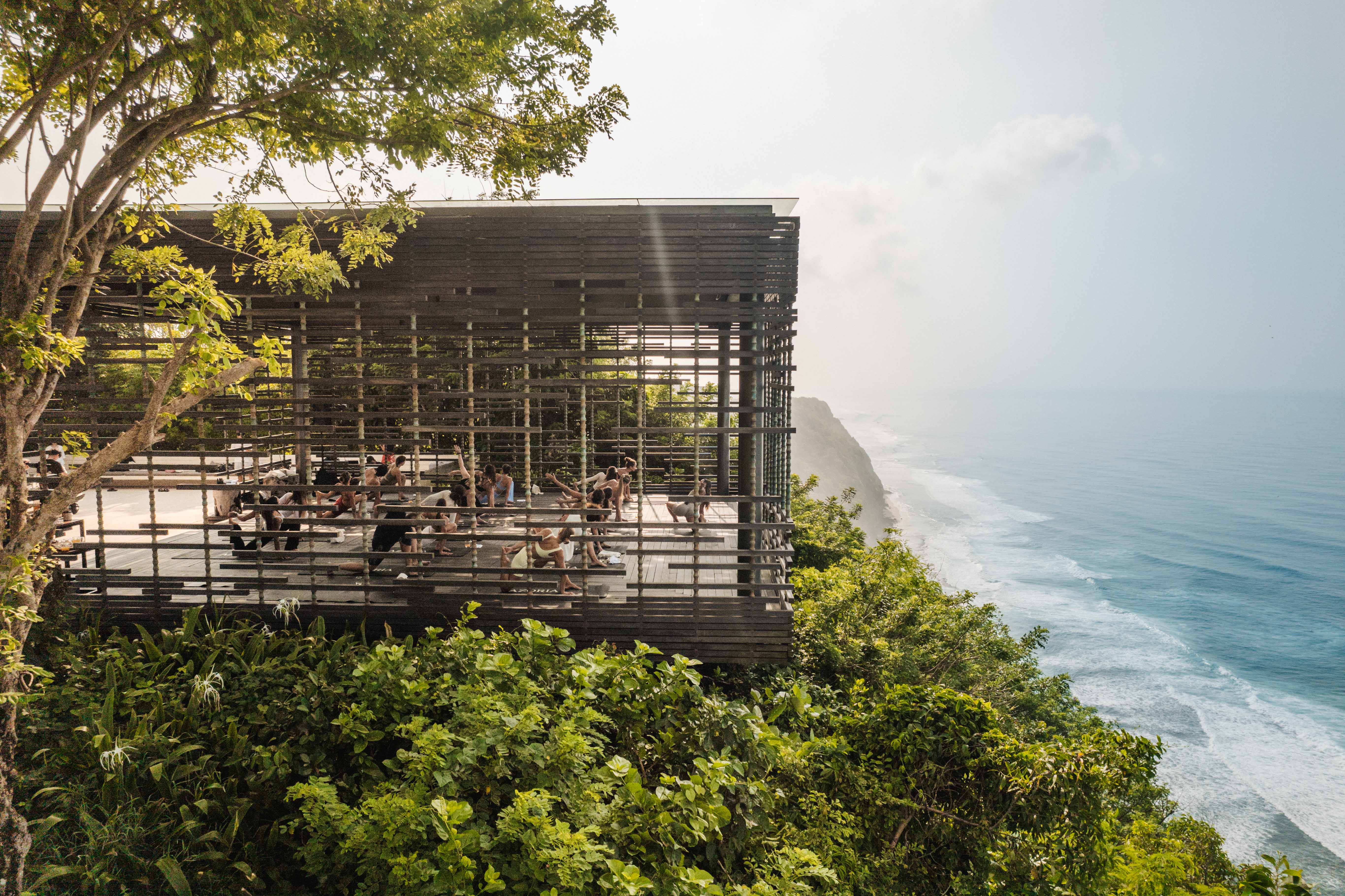

Reformer Pilates arrived in Uluwatu the way most good things arrive on the Bukit: quietly, then all at once. Reformer Pilates in Bali used to mean a trip north to Canggu. It no longer does. The clifftop south now has dedicated reformer studios, ocean-facing rooms and early classes, and the standard is high. Here is what the practice actually is, where to do it well, and what a first class asks of you.
The short version: Reformer Pilates is low-impact strength and mobility work done on a sliding, spring-loaded carriage. A class runs 45 to 60 minutes, you wear grip socks rather than shoes, and the movement clicks by about the third session. In Uluwatu, expect to pay roughly IDR 200,000 to 300,000 a class at studios around Suluban, Bingin and Pecatu.
What is reformer Pilates?
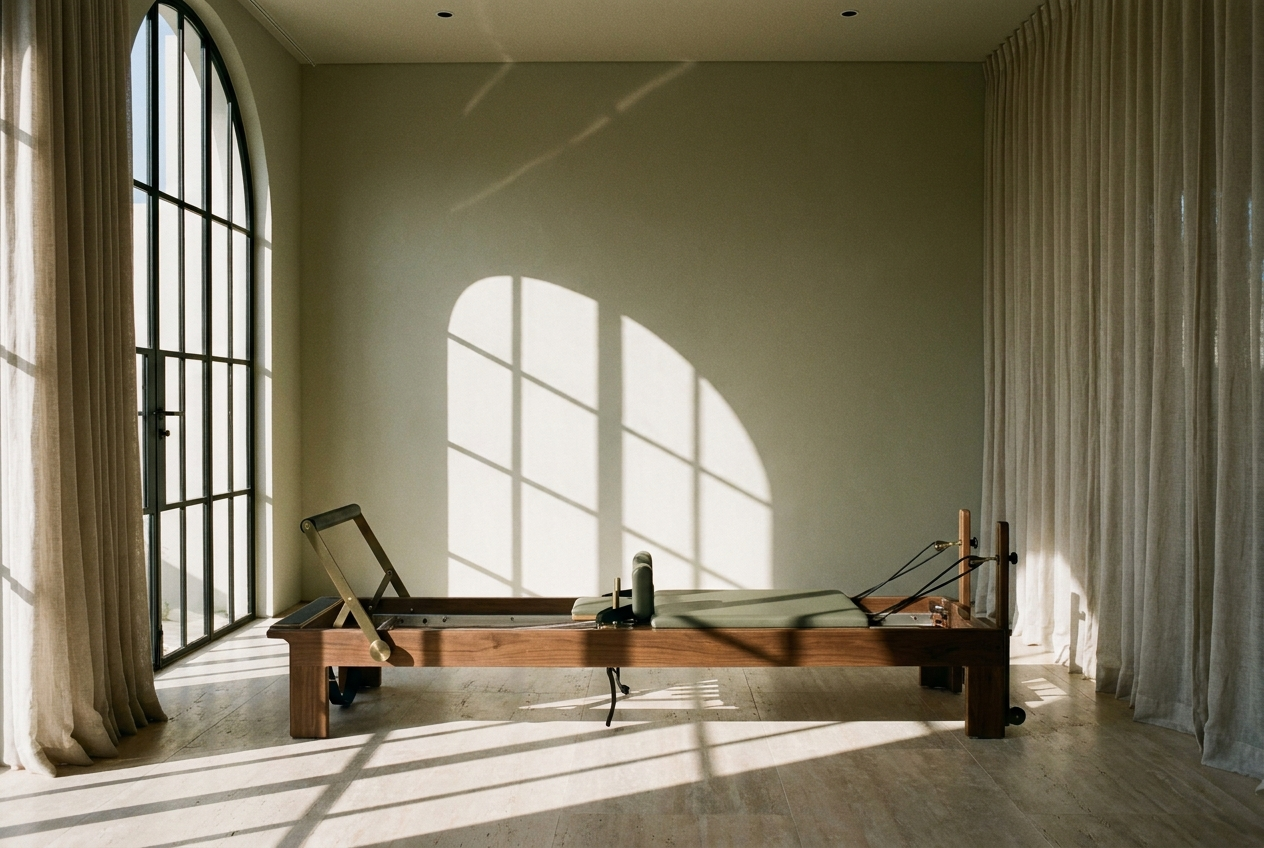
Reformer Pilates is a form of Pilates performed on a machine called the reformer: a flat carriage that slides on rails, pulled and resisted by a set of adjustable springs, with a footbar, straps and ropes at either end. You push and pull the carriage with your own body, and the springs decide how hard that is. It is strength, mobility and control under tension, low-impact on the joints, and it works the whole body rather than one part of it.
The difference from mat Pilates is the resistance. On a mat, the load is your bodyweight and gravity. On the reformer, the springs add scalable resistance and a moving surface, which means more range, more support for the back and knees, and more for the deep stabilising muscles to do. Mat builds the foundation. The reformer lets you load it.
What happens in your first class?
Arrive about ten minutes early, tell the instructor about any injuries, and leave your shoes at the door. A class is usually 45 to 60 minutes: a warm-up, a structured set of exercises moving through the springs and straps, then a stretch to finish. Wear grip socks, the kind with rubber on the sole, since bare feet slide and ordinary socks slide more.
The machine looks like more than it is. The instructor sets your spring tension and shows you each position, and within a session you stop thinking about the hardware. The honest part: the first two or three classes feel clumsy, like learning to ride a bike. By the third or fourth, the movement settles and the breathing follows. Reformer classes also run small, often a dozen people or fewer, so the correction you get is closer to a private lesson than a gym floor.
Joseph Pilates, who developed his method working with springs while interned during the First World War, put the timeline plainly: "In 10 sessions you feel the difference, in 20 you see the difference, in 30 you have a whole new body." Two or three sessions a week is the sensible place to start. The body adapts on the rest days, not in the room.
Where to do reformer Pilates in Uluwatu
A few years ago the Bukit offered yoga and surf conditioning and little else. That has changed fast. There is now a real cluster of dedicated reformer studios within fifteen minutes of each other around Uluwatu, Suluban and Bingin. The names below were current in mid-2026, though Bali studios open, move and rename quickly, so check the latest schedule before you go.
| Studio | Where | What they run | Note |
|---|---|---|---|
| Reform Pilates Bali (Reform+) | Suluban, Uluwatu | Group reformer, private studio (Cadillac, Chair, Ladder Barrel) | One of the most established Bukit operations; its Suluban studio with a rooftop café opened in early 2026. |
| Ami | Uluwatu | Reformer, mat, barre | Boutique, ocean-facing room. |
| Studio Fondue | Uluwatu | Reformer, mat, barre | Small studio, ocean-view classes. |
| Era | Bingin, Uluwatu | On-demand reformer | Bills itself as Bali's first on-demand reformer studio, with a large library of recorded classes. |
Pricing across the Bukit sits at roughly IDR 200,000 to 300,000 for a single reformer class, with class packs bringing the per-session cost down. That is broadly in line with Canggu, where the island's Pilates boom started and where the density of studios is still higher. Uluwatu's advantage is not volume. It is the morning around the class.

How often, and is it enough on its own?
For most people, two to three reformer sessions a week is plenty to feel stronger and move better within a month. It is excellent for posture, core strength, mobility and recovering range after injury, and it is gentle on the joints, which is why it suits surfers, padel players and anyone training hard elsewhere who wants strength without more pounding.
What it is not is your whole programme. The reformer builds control and stability beautifully, but it will not load the heart like a run or build raw strength like a barbell. Treat it as the spine of a week that also has some cardio and some heavier lifting, and it earns its place. Paired with a proper recovery day, it is one of the better things you can do for a body that surfs or plays in the heat.
Why Uluwatu suits the reformer
The case for doing this in Uluwatu rather than anywhere else is the rhythm it sits inside. The dry season, roughly April to October, gives you clear, hot mornings; the wet season, November to March, is humid with afternoon rain, which makes an indoor, air-conditioned reformer room one of the better things to do when the sky opens. The practice is weather-proof either way, a real advantage on an island where a lot of movement happens outdoors.
The better argument is what comes before and after. A reformer class at eight, light and precise, leaves you clear-headed for the rest of the morning rather than wrung out. A swim, a coffee, a slow breakfast on a terrace, and the day has started well without being spent. That sequence, more than any single exercise, is the reason the practice belongs on the Bukit.

Reformer Pilates at Azoria
At the Azoria Pilates Club, the reformer room sits on the top floor of the house, with the gym below it and the spa beside it, so movement and recovery share a building rather than a city. The studio is built around fifteen reformers and a Cadillac, with mat, yoga and dance in the same wing. The signature morning class is called Reformer at Eight: an hour on the carriage, then a coffee, the way the house thinks a day should open.
The tone is deliberate. Calm, architectural, precise. Strength and posture treated as a daily habit, not a project, and certainly not a transformation. Reformer sits within the wider wellness floor alongside the Recovery Zone, so a morning class can lead straight into a sauna and a long lunch. You can see the full class list on the Pilates Club page and rates on the class-pack page.
One honest note on timing, since the house opens in stages. The Azoria Padel Club opens first, in autumn 2026. The Pilates Club, the gym and the rest of the wellness floor follow in January 2027. Until then, the Uluwatu studios above are where to build the habit, and our guide to a week in Uluwatu shows where a reformer morning fits in the day.
Frequently asked questions
Is reformer Pilates good for beginners?
Yes. The springs let an instructor scale every exercise up or down, and the carriage actually supports the back and knees, so beginners are well looked after. Expect the first two or three classes to feel awkward; it clicks quickly after that.
How much does reformer Pilates cost in Bali?
In Uluwatu, a single reformer class runs roughly IDR 200,000 to 300,000, with class packs lowering the per-session price. Drop-in mat and barre classes usually cost a little less than reformer.
What should I wear to a reformer class?
Fitted activewear that moves with you and grip socks with a rubber sole. Leave your shoes at the door, and avoid loose tops that fall over your face in the lying-down work.
Is reformer Pilates better than mat Pilates?
Neither is better; they do different jobs. Mat uses your bodyweight and builds the foundation, while the reformer adds spring resistance and a moving surface for more range and load. Most people benefit from doing both.
How often should I do reformer Pilates?
Two to three times a week is a strong start for most people, enough to feel a clear difference within a month. Pair it with some cardio and heavier strength work rather than relying on it for everything.
An hour on the reformer, a coffee after. The morning does the rest.
Further reading
- The benefits of Pilates (Harvard Health). A clear, non-commercial overview of what the practice does for strength and posture.
- Pilates and the history of the reformer. Background on Joseph Pilates and how the method developed.
- Fitness and movement classes in Bali. A wider look at the island's studio scene.
Share:
Sauna and Ice Bath in Uluwatu: Contrast Therapy
The Best Gym in Uluwatu: Strength, Hyrox and the Bukit