


They get mentioned in the same breath, and they should not be. Padel vs pickleball is not a rivalry so much as a choice between two tempers. One is the European racquet sport played inside a glass box, where the walls keep the ball alive and the rally runs long. The other is the American backyard game, played on a small open court with a perforated plastic ball, fast at the net and quick to a number. Both are doubles, both are social, both are easy to start. The feel of the two is completely different.
The short version: Padel is played on a 20 by 10 metre enclosed court with glass walls that are in play, a solid stringless racket and a pressurised ball, scored like tennis. Pickleball is played on a smaller open court with a paddle and a plastic ball, with a no-volley zone called the kitchen and games to 11. Padel rewards the long rally and the wall; pickleball rewards soft hands and the dink.
What is the difference between padel and pickleball?
The core difference is the court and what surrounds it. Padel is played inside a glass-and-mesh enclosure where the walls are part of the game, like squash. Pickleball is played on an open court with no walls and a seven-foot non-volley zone at the net. Padel is bigger, walled and tennis-scored; pickleball is smaller, open and scored to 11.

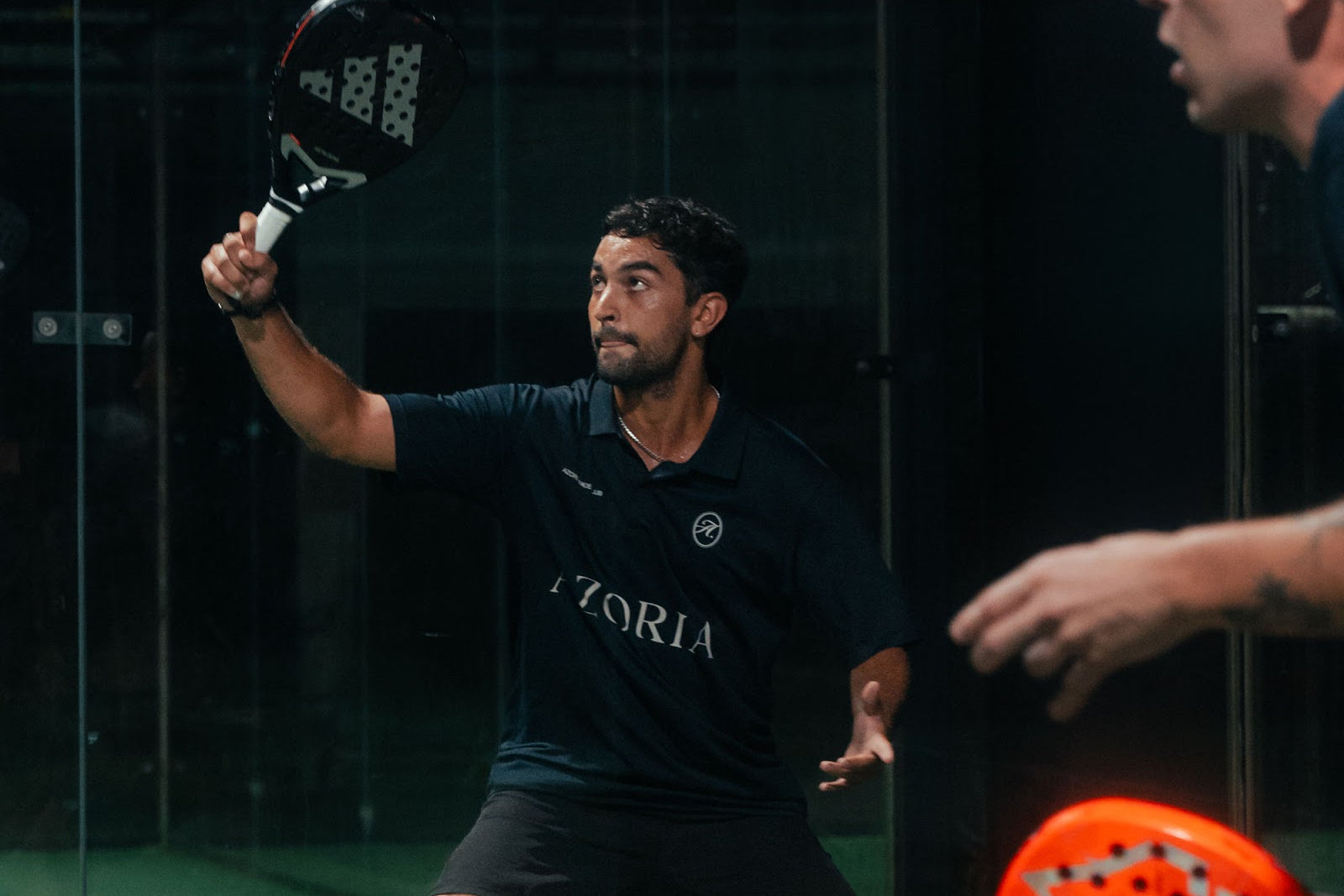
Beyond the court, the equipment tells the story. Padel uses a short solid racket with holes drilled through the face and a pressurised rubber ball that behaves like a softer tennis ball. Pickleball uses a flat paddle, a touch smaller, and a hard perforated plastic ball, the kind once cut from a child's wiffle ball. The padel ball bounces and travels. The pickleball skips low and dies quickly, which is why so much of the game happens in slow, controlled exchanges a metre from the net.
The two also come from opposite ends of the world. Pickleball was invented in 1965 on Bainbridge Island, Washington, when three fathers improvised a game for bored children with ping-pong paddles, a perforated ball and a lowered badminton net. Padel traces to 1969, when Enrique Corcuera walled in a small court at his home in Acapulco because there was no room for a tennis court. One grew up American, suburban and quick. The other grew up Spanish, club-bound and patient. You can still feel both origins on court.
Padel vs pickleball at a glance
The quickest way to see the gap is side by side.
| Padel | Pickleball | |
|---|---|---|
| Court size | 20m x 10m, fully enclosed | 13.4m x 6.1m, open |
| Walls | In play (glass and mesh) | None |
| Net height | 0.88m centre | 0.86m centre, 0.91m sides |
| Format | Almost always doubles | Singles or doubles |
| Bat | Solid racket, holes, no strings | Flat paddle, slightly smaller |
| Ball | Pressurised rubber, low bounce | Hard perforated plastic |
| Serve | Underarm, below the waist | Underhand, behind the baseline |
| Special rule | The back wall is your friend | The kitchen, a no-volley zone |
| Scoring | 15, 30, 40, deuce, best of 3 | To 11, win by two |
The court: walls versus the kitchen

This is the line that separates the two sports. In padel the glass is in play. A ball that passes you can carry into the back wall and rebound at a readable angle, and you are expected to let it travel, set your feet, and strike it off the glass. The walls turn a lost point into a saved one, and they keep rallies running long. In padel the back wall is your friend; in pickleball there is no wall at all.
Pickleball solves the small-court problem differently. Because the court is short, two strong players standing at the net could simply smash every ball, so the sport draws a line seven feet back from the net on each side. This is the kitchen, the non-volley zone, and you cannot volley while standing inside it. The kitchen forces the soft game: the dink, the drop, the patient exchange that looks gentle and is anything but. It is the rule that makes pickleball pickleball, the way the wall makes padel padel.
Is pickleball easier than padel?
Pickleball is the quicker of the two to pick up, and padel is not far behind. On a pickleball court a complete beginner can rally within minutes, because the court is tiny, the ball is slow, and there is very little ground to cover. Padel takes a session rather than a minute, mostly because of the walls. The swing is simple and the underarm serve is forgiving, but the back glass rewires your tennis instinct, and learning to wait for the rebound is the part that feels strange for an afternoon and obvious by the end of it.
Where they part ways is at the top. Pickleball's ceiling is reflex and touch, a fast, twitchy game of hands at the kitchen line. Padel's ceiling is space and patience, a chess match of lobs, walls and position where the better pair almost always beats the bigger hitters. Neither rewards raw power for long. Both flatter the player who reads the game over the one who only swings hard, which is a large part of why people in their fifties beat people half their age at both.
Padel vs pickleball in Bali
In Bali the two sports are at different stages. Padel has had a real head start, first loudly in Canggu and now across the Bukit, with established clubs and a steady supply of courts. Pickleball is newer here and growing fast, often sharing a venue with tennis or padel rather than standing on its own. A handful of clubs around the island, the Mouratoglou centre in Uluwatu and INDOPADEL in Denpasar among them, now offer both, so you can try the two back to back and feel the difference for yourself.
If you are deciding which to build a trip around, the honest answer is that the Bukit is padel country first. The courts are here, the social rhythm is here, and the game suits the way an Uluwatu day already runs: an hour of doubles in the cooler part of the morning or after the heat drops, then something cold afterwards. For where the courts actually are, our guide to where to play padel in Uluwatu maps the scene. Pickleball is worth a try while you are here, and the curiosity is rising, but padel is the racquet sport the peninsula has made its own.
Where the racquet game lives on the Bukit

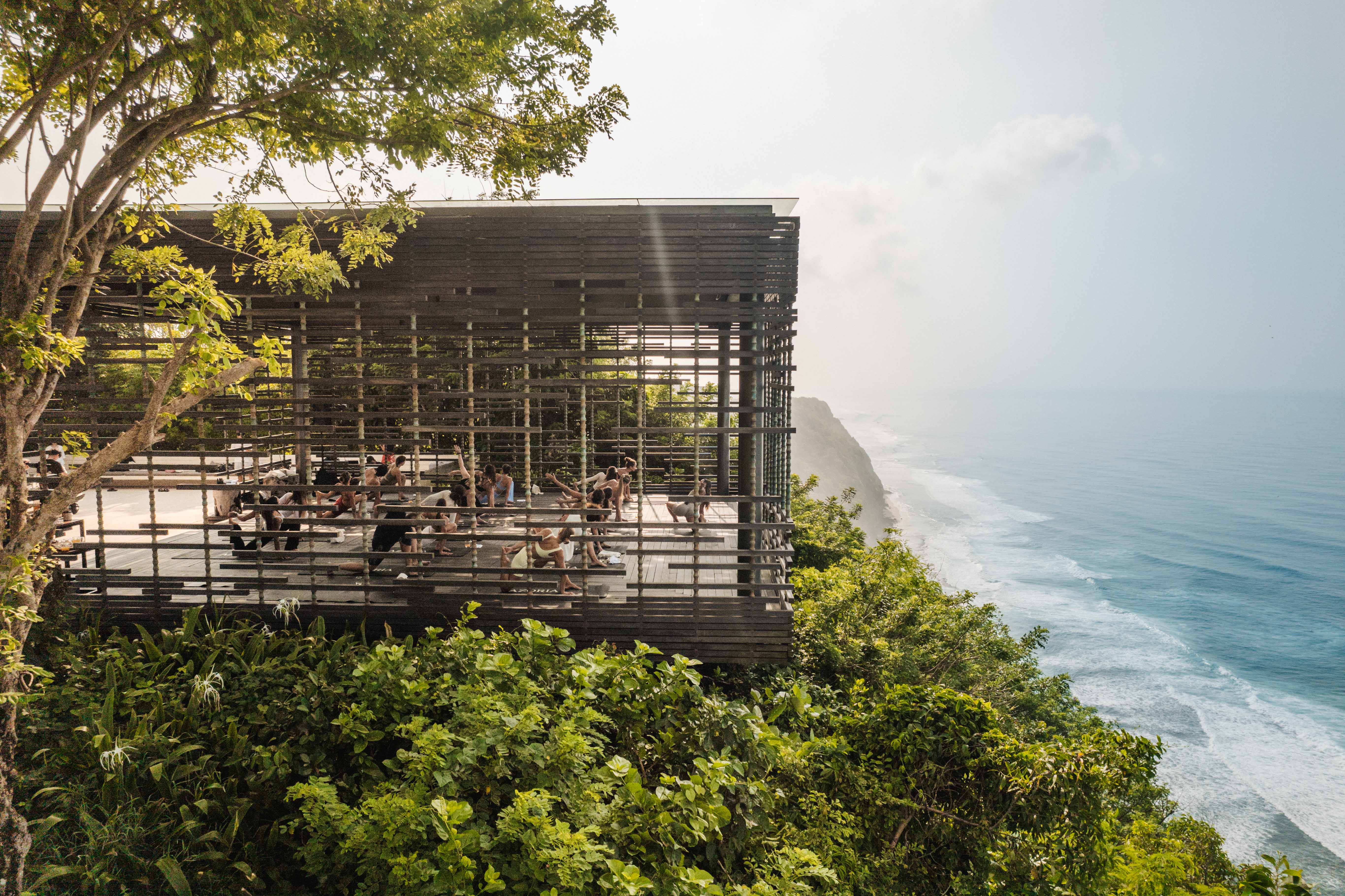
At Azoria Padel Club in Uluwatu, padel sits at the centre of the house rather than bolted to the side of it. Five glass courts, the long rally, a slower clock, and a drink at the long table after. The format suits the place: four players, conversation that survives the point, an afternoon that does not finish on the hour. If you are coming from pickleball, from tennis, or from nothing at all, the Azoria Padel Academy takes you from your first underarm serve to your first real match. New to the sport, start with padel for beginners in Uluwatu or the wider clifftop guide to the game. Curious how padel sits against the older racquet sport, read padel vs tennis.
Frequently asked questions
Is padel the same as pickleball?
No. They are different sports. Padel is played on a large enclosed court with glass walls that are in play and a solid stringless racket, scored like tennis. Pickleball is played on a small open court with a paddle, a plastic ball and a no-volley kitchen zone, scored to 11.
Which is easier to learn, padel or pickleball?
Pickleball is the fastest racquet sport to start, because the court is small and the ball is slow, so beginners rally within minutes. Padel takes about a session, mostly to get used to playing the ball off the back wall. Both are far easier to start than tennis.
What is the kitchen in pickleball?
The kitchen is the non-volley zone, a strip seven feet from the net on each side. You cannot hit the ball out of the air while standing in it. The rule stops players camping at the net to smash, and it creates the soft, dinking exchanges the game is known for.
Why does padel have walls and pickleball does not?
Padel grew from a walled garden court and built the glass into the game, so the ball stays alive off the back and side walls like squash. Pickleball grew from an open backyard court and controls the net play with the kitchen rule instead. Different solutions to keeping a small-court rally interesting.
Can you play padel and pickleball in Bali?
Yes. Padel is well established across the Bukit and Canggu, with several clubs and a steady supply of courts. Pickleball is newer and growing, often shared with tennis or padel venues. Some clubs, such as the Mouratoglou centre in Uluwatu, offer both.
Court three opens at six. The kitchen has its admirers, and the dink is a fine thing, but on the Bukit the ball comes off the back glass, and the afternoon is long.
Further reading
- International Padel Federation (FIP), the sport's governing body, with the official rules and the annual report on padel's growth.
- USA Pickleball: what is pickleball, the national body's plain-language guide to the rules, the kitchen and the court.
- Padel, an overview, a clear encyclopaedic primer on the sport's history, court and rules.
Share:
A Recovery Day in Uluwatu: Sauna, Ice Bath, Quiet
Padel Shots, Explained: Bandeja, Vibora and Walls