


A good padel retreat in Bali is a week built around the court and everything that surrounds it: the seven-minute warm-up, the long match, the longer drink after, and the recovery that lets you play again the next morning. Bali has more of these than it did two years ago, spread from Ubud to the Bukit, and the difference between a memorable one and a forgettable one comes down to a few things you can check before you book.
The short version: A padel retreat in Bali is a multi-day trip organised around daily play and coaching, usually with accommodation, recovery and food included. Uluwatu and the Bukit suit it best in the dry season, roughly April to October. Look for real courts, a proper coach-to-player ratio, a recovery routine, and a group small enough to know by the second morning.
What is a padel retreat?
A padel retreat is a stay, usually three to seven nights, structured around playing padel every day, with coaching, matches and social play built into the schedule, alongside somewhere to sleep, eat and recover. Think of it as a training holiday with manners: enough court time to actually improve, enough of the rest of the day to remember you are on an island.
Most run to a rhythm. Morning drills when the light is soft and the heat is honest. A break through the middle of the day. Matches or an Americano in the late afternoon, then dinner at a long table with people you were strangers to on Sunday. The sport is European, the setting is not, and that contrast is the whole appeal.
Padel travels well because it is built for conversation. It is doubles, played on an enclosed glass court of 20 by 10 metres, with an underhand serve and walls that stay in play. Easier to start than tennis, hard to master, and almost impossible to play in silence. A retreat simply gives the game a week to work on you.
Why Bali for a padel retreat?
Bali gives you the two things a padel week needs and rarely finds together: real courts with real coaching, and a place worth being when you are off them. The island's padel scene grew up fast between 2023 and 2025, first loudly in Canggu, then out onto the Bukit, and it now sits inside a hospitality and recovery scene that has matured just as fast.

The timing matters. The dry season runs roughly April to October, with the clearest skies and best surf from July into August. That is when outdoor courts are most reliable and the Bukit is at its fullest. The wet season, November to March, is warmer and quieter, with afternoon rain, which is less of a problem than it sounds: padel is quick to dry and a covered court plays through almost anything.
Padel itself is not a fad you are catching late. By early 2026 there were more than 58,000 courts and close to 19.4 million players worldwide, up around 16 percent year on year, according to Playtomic's Global Padel Report. Bali is one of the places that boom has landed hardest, which means the standard of play you will meet on a retreat here is higher than most people expect.
Where the padel is: Uluwatu, Canggu and Ubud
Bali has three centres of gravity for a padel week, and they are genuinely different holidays.
Uluwatu and the Bukit
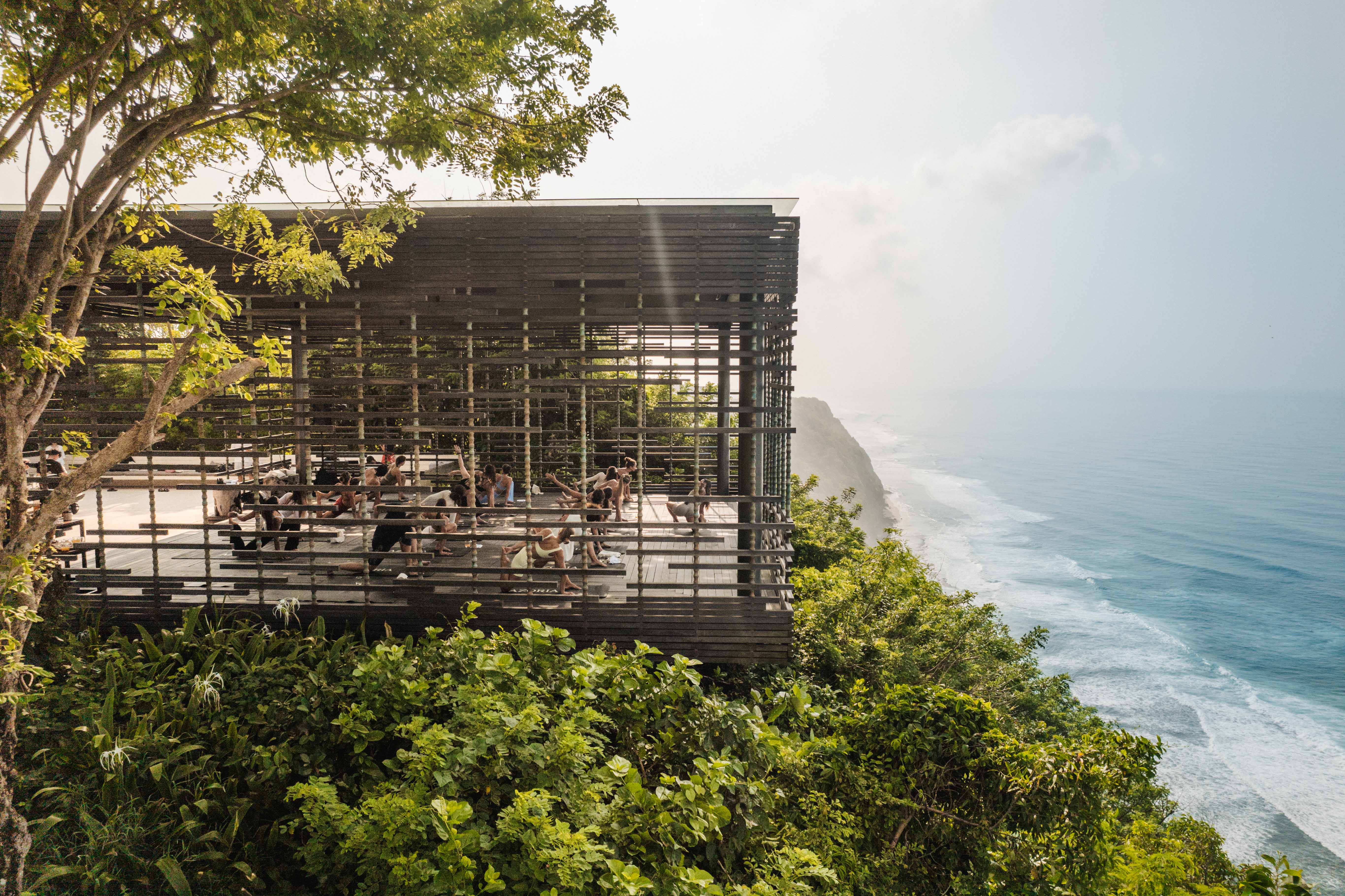
The clifftop south. Dry, dramatic limestone, serious surf, and a design-led café and restaurant layer that has matured quickly. Uluwatu suits the padel traveller who wants sport in the morning and a long afternoon after it, with the sea never far. It is quieter than Canggu and more considered, which is why it draws people who would otherwise spend the season in Lisbon or Ibiza. This is home ground for us, and the reason our guide to where to play padel in Uluwatu exists.
Canggu
Busier, denser, younger. Bali's padel boom started here, so the court supply and the standard are strong, and the café-and-scooter energy is relentless. Good if you want the buzz and the volume of games. Less good if the point of the week is to slow down.
Ubud
Inland, green, calmer, the island's wellness heart. A handful of operators run week-long padel camps here, pairing the game with yoga and quiet. It reads more as a retreat in the old sense than a sport-and-social week. Choose it if you want the padel wrapped in stillness rather than surf.
What a good padel retreat week looks like
The best weeks are not the ones with the most court time. They are the ones that let the body recover so the play on day five is better than the play on day one. A sensible day, roughly:
- Morning, on court. Warm-up and technical drills while the light is soft, around ninety minutes, when it is cool enough to work properly.
- Late morning, recovery and food. A cold plunge or a stretch, then a real breakfast. Not a smoothie on the run.
- Midday, off. The heat peaks, so you do too little on purpose. Read, swim, sleep.
- Late afternoon, matches. Doubles or a social Americano as the temperature drops, the part of the day the game is built for.
- Evening, the table. Dinner, long, with the people you have been playing against. This is where a retreat becomes a group rather than a booking.

Play hard for two blocks a day, recover between them, and eat like it matters. That is the shape worth paying for. A week of that will do more for your game than a fortnight of grinding, which is the same logic behind our note on improving your padel in a week.
What to look for before you book
Not all padel retreats are equal, and the brochure rarely tells you which is which. Six things separate a good one:
- Real courts, in good condition. Ask how many, what surface, and whether they are covered. A retreat that depends on a single outdoor court is one rainstorm from a bad week.
- A proper coach-to-player ratio. Four players to a coach is coaching. Twelve is a clinic. Ask the number before you pay.
- Recovery built in, not bolted on. Sauna, cold plunge, massage, a real rest block. The hours after padel are where the training actually lands.
- A group small enough to know. The social side is half the reason to come. A dozen people around a table works. Forty does not.
- Food worth sitting down for. You will eat every dinner here. It should be a reason to stay, not an afterthought.
- A level that matches yours. Beginners and improvers want different weeks. The good operators say plainly who each retreat is for.
How to plan and pack
Book the season, not just the week. If you want dependable outdoor play and the island at its best, aim for the dry months, April to October, and reserve courts and coaching early, because the good slots go first in July and August. If you would rather trade crowds for calm and lower prices, the green season works, especially anywhere with a covered court.
Pack light and specific: two or three technical shirts, a cap, and padel shoes with a herringbone sole for grip on turf. Most retreats provide rackets and balls, but a racket you know is worth the space in the bag. Bring reef-safe sunscreen and drink more water than feels necessary. The heat is the opponent nobody warns you about.
If you are still deciding between a full retreat and a looser trip built around courts, our guide to planning a padel holiday in Bali lays out both.
A padel retreat at Azoria

We are building Azoria Retreats around the same idea that runs through the whole house: that sport, recovery and the table are not separate appointments but the rhythm of a good day. The Azoria Padel Club sits on the Uluwatu clifftop with five courts, one of them central, and a coaching programme run through the Azoria Padel Academy. Around it: a recovery floor, a Mediterranean kitchen, and a long table that does not finish on the hour.
The padel comes first, with a soft opening in September 2026 and full play from October. Our padel retreats will follow, built as a house rather than a court: the morning drills, the long afternoon, the dinner that turns players into members. If that is the week you are looking for, the waitlist is the place to start.
Frequently asked questions
What is a padel retreat?
A padel retreat is a multi-day trip organised around daily padel play and coaching, usually with accommodation, recovery and meals included. Most run three to seven nights and mix technical drills in the morning with matches or social play in the afternoon.
When is the best time for a padel retreat in Bali?
The dry season, roughly April to October, is best for reliable outdoor play and the clearest weather, with the peak in July and August. The wet season, November to March, is quieter and cheaper, and works well anywhere with a covered court.
Do I need to be good at padel to go on a retreat?
No. Most Bali retreats run for mixed levels or split by ability, and beginners are common. Ask the operator who a given week is for, and choose the one that matches where you actually play, not where you hope to.
Where in Bali is best for a padel retreat?
Uluwatu and the Bukit suit players who want sport in the morning and a long, quiet afternoon by the sea. Canggu is busier with more courts and more games. Ubud pairs padel with yoga and stillness inland.
What should I pack for a padel week in Bali?
Two or three technical shirts, a cap, padel shoes with a herringbone sole, reef-safe sunscreen, and a racket you know if you have one. Most retreats provide rackets and balls, but bring your own if you are particular.
The court is where it starts. The rest of the day is what you remember. Book the week that gets both right.
Further reading
- Playtomic Global Padel Report: current figures on courts, players and the sport's growth worldwide.
- International Padel Federation (FIP): the governing body, official rules and court specifications.
- Indonesia Travel, Bali: official tourism guidance on seasons and getting around the island.
Share:
A Pink October on Court: Padel for the Cause in Bali
A Padel Weekend in Bali After the Singapore Grand Prix